
Regional Theory of Comparative Education Nord America 2015
www.sissu.it North America 2015 According to Pampanini’s World Philosophy of the Dialogue Among Civilizations, North America stands for the value of Acume. See Pampanini, G. (2012). A Dialogue Among Civilizations. World Philosophy of Education – An Essay. Catania: CUECM. Regarding the Regional Theory of Comparative Education see Pampanini, G. (2004). Critical Essay on Comparative Education. Catania: CUECM. Structure of the file: - SISSU’s programme - Asia as a whole - Follows each country. SISSU’s programme: Collaboration with teachers for realizing programmes of Democratization of the curricula and the Right to Education. North America as a whole: CANADA Edmonton Journal It all began at the back of the Shamrock Fruit Store in 1903. Amid apple crates and potato sacks, three enterprising newsmen produced the first edition of the Edmonton Journal on November 11, www.sissu.it 1903. Their mission was simple: to provide relevant and reliable news and information to the Edmonton community. A century later, our focus on the community still beats at the heart of all we do, and is the lifeblood of our organization. We remain Edmonton's most trusted voice, providing a professional perspective on news, business, sports and entertainment that's read by more northern Albertans than any other daily newspaper. Our commitment to the community is evidenced not only in our local news and information coverage, but also in our long-standing involvement with many local charitable organizations such as the United Way Alberta Capital Region, the Edmonton Food Bank, and many others. The Edmonton Journal is a proud sponsor of several major events in the community including the Running Room Indoor Games, the Edmonton International Fringe Festival, the Canadian Country Music Awards and the Festival of Trees. As part of our commitment to being a socially responsible member of the community, The Edmonton Journal pursues and adheres to, environmentally sound and sustainable best practices. The Edmonton Journal is committed to protecting our environment for future generations, and is proactively taking measures to ensure that our business processes have a minimal impact on our environment. Our dedication to provide news and information to the community remained steadfast throughout the last century, and will endure into the new century and beyond. Although our commitment to our core mission is unchanging, what is changing is how we are providing this news and information to our readers. We strive to deliver our mission of relevant and reliable news to our readers whenever and however they want. This includes traditional print medium along with the many new and dynamic media our readers demand. Our community is growing and evolving, and we are growing and evolving along with it while fulfilling our original mission created over 100 years ago. Ways to interact with the Edmonton Journal: Print Edition Purchase at your local retailer or click here to subscribe today for home delivery. ePaper An exact digital replica of the printed paper, free to print subscribers and otherwise available at a nominal fee. Click here to subscribe. Website Get breaking news as it happens and explore engaging multimedia such as videos, photo galleries, sound slides and much more at http://www.edmontonjournal.com. Mobile Get us on the go from your smartphone. Go to http://m.edmontonjournal.com to view the mobile site from your smartphone. You can also check out our information page with additional information instructions, a launcher for the BlackBerry and an FAQ document. Amazon Kindle You can read The Journal on Kindle. Become a fan of the Edmonton Journal Facebook page and discover new and fun ways to interact with us. Plus, you'll receive updates on contests, events and a whole lot more. www.sissu.it Follow us on Twitter! We're plugged into the Twittersphere and want you to join the conversation. We value your feedback. If you're looking for ways to get in touch with people and departments at The Journal, please Contact Us. We'd love to hear from you! The Edmonton Journal and edmontonjournal.com are published by Edmonton Journal, a division of Postmedia Network Inc. Both the newspaper and the website are published daily except for selected holidays. The Glengarry News The Glengarry News is a weekly newspaper serving historic Glengarry County, the most storied county in Eastern Ontario, Canada. The Glengarry News was founded in 1892 and has published uninterruptedly ever since. For almost the first one hundred years The News had only two editor-publishers, its founder and president Col. A.G.F. Macdonald, a citizen-soldier who raised and led overseas in World War I the 154th Battalion, and his son Eugene Macdonald. Glengarry County was initially settled in the late 1700s and early 1800s, first by Scottish United Empire Loyalists fleeing the American Revolution and shortly afterwards by hardy Scottish immigrants from the westernmost part of Scotland from place names that still serve Glengarry County well today. Glengarry County is the prime keeper of Scottish traditions in Canada. It is the site of the largest Highland Games in the world, the Glengarry Highland Games held each year on the last weekend of July or first weekend of August before the Ontario Civic Holiday at Maxville, where 20,000 or more gather to honour their past at the North American Pipe Band and Highland Games Championships. But Glengarry County is more than things Scottish. Those early Scottish immigrants were joined by equally hardy FrenchCanadians from Lower Canada, and immigrants from all over the world, to create a harmonious blend that lives on to this day. This is the home of The Glengarry News. Please read on, enjoy your tour, and "wull ya nae come back again?" www.sissu.it Meet Our Staff 613-525-2020, ext.23 Richard Mahoney, Publisher / General Manager Click here to send an online message The Hill Times The Hill Times, Canada's politics and government newsweekly, first rolled off the presses on Oct. 5, 1989, changing the coverage of Canadian federal politics and government forever. We've been on a roll ever since. The Hill Times is an independently-owned newspaper based in Ottawa. Breaking exclusive stories and blazing trails every week, we're an influential must-read for the savvy political and government insider. Ottawa City Magazine calls us "influential." The Globe and Mail calls us as "feisty" and "hot." CTV's Ottawa bureau says we're a "must-read for anybody or anyone who cares about the democratic process." Some have called us "the inside-the-beltway bible" or the "political insiders' bible." And The Toronto Star's Susan Delacourt says The Hill Times "delves into political and policy matters that we in the daily, national press can only scratch on the surface." Our readers include Cabinet ministers, MPs, Senators, political staffers, lobbyists, 'backroomers,' political junkies, and some of the top decision-makers in the country, including influential players in Parliament, Cabinet, the Prime Minister's Office, the Privy Council, the Finance Department, Treasury Board, the Department of National Defence, the Justice Department, and more. We have been giving political players and decision-makers a key platform to communicate with each other within government since 1989. On top of our weekly news, The Hill Times conducts and publishes exclusive surveys and lists every year, including the highly-anticipated "The 100 Most Influential List," "The Top Lobbyists List," "The Terrific Twenty-Five Staffers List," "The Annual Best and Worst in Federal Politics List," and the tongue-in-cheek "Annual Sexy and Politically Savvy Survey," as well as the "Top 100 Best Books" list. www.sissu.it We also publish regular and substantive "Public Policy Briefings." Each policy briefing includes an in-depth Q&A interview with the key Cabinet minister and guest columns from the relevant government and political players involved, along with our own exclusive stories. We look at Health, Transportation, Environment, Innovation, the Economy, Defence and Security, Agriculture, Energy, Renewable Energy, Climate Change, Aerospace, Technology, Communications and Intellectual Property, Innovation, and Natural Resources. The Reporting The Hill Times breaks exclusive, insider political news stories every week. The newspaper is led by editor Kate Malloy, who is assisted by deputy editor Bea Vongdouangchanh, acting deputy editor Mark Burgess, and reporters Abbas Rana, Tim Naumetz, Laura Ryckewaert, and Rachel Aiello. Jake Wright is our photographer. Our columnists also include: Tisha Ashton, Keith Brooks, Karl Bélanger, Andrew Cardozo, John Chenier, David Crane, Sheila Copps, Murray Dobbin, Alice Funke, J.L. Granatstein, Éric Grenier, Dennis Gruending, Cory Hann, Tim Harper, Chantal Hébert, Greg Elmer, David T. Jones, Joe Jordan, Warren Kinsella, Brad Lavigne, Greg MacEachern, Camille Labchuk, Gerry Nicholls, Tim Powers, Susan Riley, Ken Rubin, Evan Sotiropoulos, Rick Smith, Ian Wayne, Nelson Wiseman, and Armine Yalnizyan. Be informed. Stay inside the loop. Enjoy. The Globe and Mail Inc. 444 Front St. W., Toronto, ON Canada M5V 2S9 Phillip Crawley, Publisher The London Free Press EDUCATION A peek into what London elementary school teachers do on professional development days 0 www.sissu.it By Kate Dubinski, The London Free Press Saturday, April 18, 2015 2:37:52 EDT PM Image: 1 of 5 Woodland Heights Public School principal Jane Hanbuch pins a worksheet to the end of a bookshelf as her teachers become the students during learning exercises on a PD Day at the Springbank Drive school in London, Ont. on Friday April 17, 2015. Craig Glover/The London Free Press/Postmedia Network There’s a Gavin Lasenby in every class. You know the type — he waves his hand in the air hilariously when the teacher asks a question. He’s a bit of a goofball, always quick with a joke and maybe more sensitive than people give him credit for. www.sissu.it Lasenby isn’t usually a student — he’s one of the special education teachers at Woodland Heights public school. But Friday, he was one of 40 grownups who sat at tiny desks on chairs barely a foot off the ground, eager to learn on their professional development day while kids had the day off. “I look forward to this because it’s a change, it’s an opportunity to get together with staff and to sit down and share ideas,” Lasenby said. “It’s good for our growth as teachers. We have a common goal and we work towards it. We’re all here planning together. This is how we keep fresh and on top of what’s going on.” In the library where the professional development learning was going on, there was a table of keeners, a group that stayed behind debating an assignment long after being told it was break time. “On these days, the staff becomes our students, our classroom. We’re responsible for teaching the teachers,” said Jane Hanbuch, the school’s principal. “Our learners have changed and our different requirements for the learners and we need to make sure we allow them to learn those. The basics have always been there. But do we drill multiplication facts? Not often. Do we make sure they know when, how and why to multiply? Yes.” Kids today need drastically different skills than their parents or grandparents, Hanbuch said. “If I could add, subtract, multiply and divide and read and write, I could graduate, get a job in a factory on the line and I was set for life. People with those skills aren’t set for life anymore.” Friday, Woodland Heights teachers focused on how to teach math and numeracy that can be everything from sequencing to counting, logic and proportional reasoning. “(PD days) remind me what it’s like to be a student, what it’s like to sit and listen and learn,” said Tara Phillips, a teacher librarian at the school. “As a parent, I know it’s a pain to find child care but I know that my kids’ teachers are down the road learning new things.” [email protected] Twitter.com/KateatLFPress HOW THE DAYS WORK In general, they’re called professional activity days. The Thames Valley District school board has six: three focused on student achievement (writing report cards, meeting with parents, figuring out how to help students who are struggling) and three focused on teacher practice. www.sissu.it The Ministry of Education chooses a topic it wants schools to work on during one of those days. This year and next year, the topic is numeracy. Ontario math skills lag behind other provinces and countries. WOODLAND HEIGHTS PUBLIC SCHOOL 40 teachers (including early childhood educators) 570 pupils Classes from full-day kindergarten to Grade 8, plus three developmental classes. What they said: “A teacher doesn’t teach one way to the whole class because everyone in the class is at different levels. It’s so complicated, and as a teacher (they) have to constantly change the way (they are) teaching.” Karen Dalton, associate director of learning support services “We want every teacher to be teaching numeracy whether they’re teaching phys. ed or French.... Our children require deeper thinking skills than we ever did. “ Jane Hanbuch, principal, Woodland Heights public school “Parents think this is another day off for teachers and that’s unfortunate. We’re here learning.” Vivian Gagne, Grade 3/4 teacher We asked the teachers: what do you want parents to know about PD days: Tricia Alexander, Grade 1: “The learning goes back to our classrooms. The ideas we hear here plant seeds, and I’ll think about them and implement them on Monday. It’s not a day off.” Adam Dawson, Grade 4 teacher: “We try to stress that we’re always learning, just like our students.” Kathryn Vowles, early childhood educator: “I don’t think they know that we learn. We actually come in and learn, get together with other teachers and share what we know with each other.” SAMPLE PROPORTIONAL REASONING: Q: There are two puppies. One grows from 5 kg to 8 kg, the other grows from 3 kg to 6 kg. Which dog grew more? A: The second grew more because he doubled his previous weight. This is called multiplicative thinking. www.sissu.it Edmonton Journal, 17th November 2015: Majority of Canadians oppose Trudeau’s plan to bring 25,000 Syrian refugees over in just six weeks: poll Aileen Donnelly More than half of Canadians oppose the government’s plan to resettle 25,000 Syrian refugees in the next six weeks, and the most common complaint is that there isn’t enough time, a new poll shows. Prime Minister Justin Trudeau reaffirmed his ambitious election promise on Tuesday after several municipal and provincial leaders suggested he was more concerned with speed than security. “We continue to be very much committed to keeping Canadians safe while we do the right thing to engage responsibly on this humanitarian crisis,” Trudeau said. But less than half of Canadians (42 per cent) either moderately or strongly support the Liberal government’s plan to bring 25,000 refugees over by Jan. 1, 2016, while 54 per cent moderately or strongly oppose it, according to an Angus Reid Institute poll conducted three days after terrorist attacks killed 129 people in Paris. Another five per cent are undecided. Of those who oppose the Liberal government’s refugee plan, the majority (53 per cent) cite tight timelines as their main concern, saying they fear it’s too short to allow for appropriate security checks. Another ten per cent think 25,000 refugees is just too many, while eight per cent say the plan is too expensive. The Liberal government has not released details of their plan, including how they will get the refugees to Canada and how much it will cost. Almost one-third (29 per cent) of those who oppose the Liberal plan say Canada should not take in any refugees. Support for Trudeau’s plan is lowest in Alberta (33 per cent) and highest in Atlantic Canada (50 per cent). Canadians between 18 and 34 are the only age group that has more people who support the plan (50 per cent) versus oppose it (44 per cent). Public opinion has changed only slightly in the wake of the attacks allegedly carried out by Islamic State of Iraq and the Levant terrorists. At the end of last month, another Angus Reid poll found that www.sissu.it 51 per cent of Canadians opposed the refugee plan, while 39 per cent said they support it. That survey showed that the refugee plan was the second-most-opposed part of the Liberal platform. The online survey of 1,503 Canadians — a representative randomized sample drawn from members of the Angus Reid Forum — was conducted on Nov. 16. A probability sample of this size carries a margin of error of plus-or-minus 2.5 per cent, 19 times out of 20. Election on 19th October 2015: Justin Pierre James Trudeau PC MP (born December 25, 1971) is a Canadian politician who is the 23rd and current Prime Minister of Canada, as well as the Leader of the Liberal Party.[1][2] He is the second-youngest Canadian Prime Minister after Joe Clark and, as the eldest son of former Prime Minister Pierre Trudeau, is also the first child of a previous Prime Minister to hold the post.[3][4] Trudeau was born in Ottawa and attended Collège Jean-de-Brébeuf. He earned a BA in English literature from McGill University in 1994 and a BEd from the University of British Columbia in 1998. He gained a high public profile in October 2000, when he delivered a eulogy at his father's state funeral.[5] After graduating, he worked as a teacher in Vancouver, studied engineering, and began a master's degree in Environmental Geography. He also used his public profile to advocate for various causes and acted in the 2007 TV miniseries The Great War.[6] After becoming more involved in politics after his father's death, Trudeau was elected in the 2008 federal election to represent the riding of Papineau in the House of Commons. In 2009, he was appointed the Liberal Party's critic for Youth and Multiculturalism and the following year became critic for Citizenship and Immigration. In 2011, he was appointed as critic for Secondary Education and Youth and Amateur Sport. Trudeau won the leadership of the Liberal Party in April 2013, and went on to lead his party to victory in the 2015 federal election, moving the third-placed Liberals from 36 seats to 184 seats, the largest-ever numerical increase by a party in a Canadian election. NYT, 6th Dec 2015: Justin Trudeau Outlines Sweeping Agenda for Canada By IAN AUSTENDEC. 4, 2015 Photo www.sissu.it Prime Minister Justin Trudeau of Canada, left, and Governor General David Johnston in Parliament in Ottawa on Friday. Credit Chris Wattie/Reuters Advertisement Continue reading the main story Continue reading the main story Share This Page Continue reading the main story OTTAWA — Getting down to work after a whirlwind global tour, Justin Trudeau, Canada’s new Liberal prime minister, presented Parliament with a sweeping legislative agenda on Friday. Mr. Trudeau’s program contains promises for conventional measures like middle-class tax cuts and pension improvements. He also promised to push for several major changes, including the legalization of marijuana, a revamping of how Canadians elect the House of Commons, and the elimination of the partisan element in Senate appointments, allowing any Canadian to apply for those positions. But above all, Mr. Trudeau made it clear that he intended to roll back many measures, large and small, introduced by the Conservative government of Stephen Harper over the past decade. Continue reading the main story www.sissu.it Related Coverage Justin Trudeau Is Sworn In as Prime Minister of CanadaNOV. 4, 2015 Man in the News: Justin Trudeau, Son of a Canadian Leader, Follows His Own Path to PowerOCT. 20, 2015 Under Canadian parliamentary tradition, Mr. Trudeau’s agenda was presented by the country’s governor general, David Johnston, the representative of Queen Elizabeth II, in a “speech from the throne.” But the words were Mr. Trudeau’s, and for the most part they reflected his campaign promises as well as his election-night declaration that “sunny ways” had come to the country. “Canadians have been clear and unambiguous in their desire for real change,” Mr. Johnston told a joint session of the House of Commons and the Senate. “Canadians want their government to do different things, and to do things differently.” Under normal circumstances, Mr. Trudeau, 43, who was sworn in as prime minister a month ago, would probably have waited until well into the new year to recall Parliament. The comparatively rapid opening of the new session, which will sit for only a week before starting a prolonged winter recess, appears to have been a signal that Mr. Trudeau wants to move quickly on his promises. The timing was not the only break from tradition on Friday. When Mr. Johnston arrived at Parliament, he and Mr. Trudeau were greeted by David Charette, an Ojibwe artist who drummed and sang an aboriginal honor song. Then as they passed down the hall of honor, where a radical Islamist gunman was killed by security forces just over a year ago, the two leaders were met by a large crowd of new Canadian citizens, recent Syrian refugees to Canada and schoolchildren, rather than the usual cluster of dignitaries. www.sissu.it At just under 15 minutes, the speech was also unusually brief, perhaps to the relief of the many politicians, judges, diplomats and dignitaries who formed the standing room only crowd in the Senate chamber. But its brevity was offset by the sweep of its broad promises. Some of the proposals have been heard before. The speech affirmed the government’s commitment to admit 25,000 refugees from Syria by the end of February, an extension of its earlier promise to reach the target by the end of this month. Military bases have been readied and an abandoned terminal at Toronto’s airport has been reopened to accept the refugees, the first of which may begin arriving next week. That program, however, has encountered at least one unforeseen snag. Many refugees, apparently hoping that they will be able to return to Syria, have turned down invitations to come to distant Canada. Only 6.3 percent of those contacted by the United Nations in Jordan and Lebanon during the last half of November said they were interested. Advertisement Continue reading the main story The speech said the government would seek to rebuild relations with “our closest friend and partner, the United States,” a relationship that was strained under Mr. Harper. But it made no mention of Mr. Trudeau’s pledge to pull Canada’s modest contribution of fighter jets from the American-led coalition’s campaign against the Islamic State while increasing the number of Canadian ground troops for training purposes. Nor did it clarify Mr. Trudeau’s position on the Trans-Pacific Partnership trade agreement, which was endorsed by Mr. Harper and championed by President Obama, beyond promising to “negotiate beneficial trade agreements.” While it is unclear how long it will take Mr. Trudeau to transform his promises into action, he has a considerable advantage over an incoming American president. He controls a solid majority of the votes in the House of Commons, and Canadian members of Parliament must vote their party line on important legislation or join an opposition party or sit as independents, moves that are often political poison. But many of his promises, like a national climate change plan and a new national public health care accord, will require the cooperation of the 10 provinces. While only one, Saskatchewan, is now governed by a party associated with the federal Conservatives, regional interests often clash with federal priorities. Similarly, Mr. Trudeau has pledged a new relationship with Canada’s aboriginal population. In particular, he promised on Friday to move ahead on adopting the 94 recommendations of a commission that examined the effects of a longstanding policy that forced aboriginal children into government-funded boarding schools, a system it called “cultural genocide.” www.sissu.it Many of those recommendations, like the formation of a panel of inquiry to investigate why a disproportionately large number of aboriginal women are murdered or go missing, can be easily met. But others, like improving the level of health care in native communities, may require substantial expenditures. And some key recommendations, particularly related to the powers of native groups and the recognition of aboriginal laws, may prove thorny. The Conservatives, who now lead the opposition, found nothing to praise in the speech. Rona Ambrose, who became the acting party leader after Mr. Harper’s resignation, criticized its lack of references to major industries like forestry and automaking as well as the absence of any direct mention of the Islamic State. “There’s no mention of the private sector,” she said, after characterizing its contents as being “big government, big taxes.” Mr. Trudeau has repeatedly boasted that he won election while avoiding the negative campaign tactics and exploiting polarizing issues, tactics favored by Mr. Harper. But Friday’s speech was not above taking some shots at the former government’s ways, without directly naming it. “Canadians elected a government to bring us together, not to set us against one another,” Mr. Johnston read. “Canada is strong because of our differences, not in spite of them.” www.sissu.it USA Dal New York Times del 5 gennaio 2015. Editorial The Central Crisis in New York Education By THE EDITORIAL BOARD JAN. 4, 2015 Gov. Andrew Cuomo’s forthcoming State of the State address is expected to focus on what can be done to improve public education across the state. If he is serious about the issue, he will have to move beyond peripheral concerns and political scoresettling with the state teachers’ union, which did not support his re-election, and go to the heart of the matter. And that means confronting and proposing remedies for the racial and economic segregation that has gripped the state’s schools, as well as the inequality in school funding that prevents many poor districts from lifting their children up to state standards. These shameful inequities were fully brought to light in 2006, when the state’s highest court ruled in Campaign for Fiscal Equity v. State of New York that the state had not met its constitutional responsibility to ensure adequate school funding and in particular had shortchanged New York City. A year later, the Legislature and Gov. Eliot Spitzer adopted a new formula that promised more help for poor districts and eventually $7 billion per year in added funding. That promise evaporated in the recession, spawning two lawsuits aimed at forcing the state to honor it. www.sissu.it A lawsuit by a group called New Yorkers for Students’ Educational Rights estimates that, despite increases in recent years, the state is still about $5.6 billion a year short of its commitment under that formula. A second lawsuit was filed on behalf of students in several small cities in the state, including Jamestown, Port Jervis, Mount Vernon and Newburgh. It says that per pupil funding in the cities, which have an average 72 percent student poverty rate, is $2,500 to $6,300 less than called for in the 2007 formula, making it impossible to provide the instruction other services needed to meet the State Constitution’s definition of a “sound basic education.” These communities and others like them are further disadvantaged by having low property values and by a statewide cap enacted in 2011 that limits what money they are able to raise through property taxes. And last year the New York State United Teachers union said that the cap had been particularly harmful to poorer districts. These inequalities are compounded by the fact that New York State, which regards itself as a bastion of liberalism, has the most racially and economically segregated schools in the nation. A scathing 2014 study of this problem by the Civil Rights Project at the University of California, Los Angeles, charged that New York had essentially given up on this problem. It said, “The children who most depend on the public schools for any chance in life are concentrated in schools struggling with all the dimensions of family and neighborhood poverty and isolation.” The Cuomo administration seemed not to acknowledge these issues in a letter last month to the chancellor of the New York State Board of Regents and the commissioner of education in which it promised “an aggressive legislative package” to improve education in the state. Among the dozen issues it said it wanted to address were strengthening the teacher evaluation system, improving the process for removing low-performing teachers and improving teacher training. The regents agreed that these were legitimate issues needing attention. But they also noted that these reforms were unlikely to improve the schools unless they were paired with new investments along the lines of the $2 billion in extra spending that the regents had recommended earlier. No less pointedly, they urged Mr. Cuomo to address the “deeply disturbing inequalities in resources” that exist between poor and wealthy districts, as well as the destructive pattern of segregation. Mr. Cuomo must take on both of these central issues. Meet The New York Times’s Editorial Board » A version of this editorial appears in print on January 5, 2015, on page A16 of the New York edition with the headline: The Central Crisis in New York Education. Order Reprints| Today's Paper|Subscribe Le Monde: www.sissu.it Attentats de Boston : Djokhar Tsarnaev condamné à la peine de mort Le Monde.fr | 15.05.2015 à 21h33 • Mis à jour le 16.05.2015 à 15h47 | Par Stéphane Lauer (New York, correspondant) Djokhar Tsarnaev, l'un des deux auteurs des attentats du marathon de Boston a été condamné, vendredi 15 mai, à la peine de mort. Après 14 heures de délibérations, les douze jurés de la Cour fédérale du Massachusetts, ont décidé de suivre les réquisitions des procureurs. Le jeune homme de 21 ans, d'origine tchétchène, avait été reconnu coupable le 8 avril d'avoir posé avec son frère Tamerlan deux bombes à proximité de la ligne d'arrivée de la course le 15 avril 2013, faisant trois morts et 264 blessés. Lire le récit : Du Daghestan à Boston, itinéraire d'un tueur Pour que la peine de mort soit prononcée, il fallait que les jurés, sept femmes et cinq hommes, prennent une décision unanime. Sur les trente chefs d'accusation dont Djokhar Tsarnaev faisait l'objet, 17 étaient passibles de la peine capitale. « Après tout le carnage, l'effroi et la terreur qu'il a causé, la bonne décision est claire, avait affirmé le procureur Steven Mellin en conclusion du procès. La seule sentence qui fasse justice dans ce cas est la mort », avait-il ajouté. À la lecture de la sentence, le condamné est resté, comme tout au long du procès, impassible. La défense a insisté sur l'emprise de son frère Pendant les quatre mois d'audience, la stratégie de la défense a consisté à soutenir que Djokhar Tsarnaev n'était passé à l'acte que sous l'emprise de son frère. Décrit comme un « bon garçon », un élève respecté de ses professeurs, choyé par sa famille, l'accusé n'aurait basculé dans l'horreur qu'à cause de Tamerlan, qui a été tué pendant la chasse à l'homme qui a suivi les attentats. « Si Tamerlan www.sissu.it n'avait pas été là, cela ne se serait jamais passé », a affirmé Judy Clarke, l'une des avocats de Djokhar Tsarnaev. Mais cette spécialiste de la peine de mort, qui a évité la peine capitale à des cas désespérés comme Theodore Kaczynski, plus connu sous le nom d'« Unabomber », le meurtrier de plusieurs personnes grâce à des paquets piégés, Zacharias Moussaoui, le Français impliqué dans les attaques du 11 Septembre 2001, ou encore Eric Rudolph, l'auteur de l'attentat des jeux olympiques d'Atlanta en 1996, n'a pas réussi à humaniser suffisamment Tsarnaev pour lui éviter la mort. Ses arguments se sont brisés contre des faits accablants, une succession de témoignages plus poignants les uns que les autres et un manque évident de repentance de la part de l'accusé. « L'insensibilité et l'indifférence qui vous permet de détruire la vie des gens, d'ignorer leur douleur et leur chagrin ne va pas disparaître simplement parce que vous allez être enfermé dans une cellule de prison, avait prévenu le procureur William Weinreb, c'est ce qui vous permet d'être un terroriste et c'est ce qui vous isole de tout sentiment de remords ». Le seul moment où le jeune Tchétchène avait fait preuve d'émotion, c'est lorsque sa tante, appelée à la barre, s'est effondrée en pleurs, l'empêchant de témoigner. Djokhar Tsarnaev avait alors pris un mouchoir en papier pour essuyer une larme sur son visage. Des familles s'opposaient à la peine de mort La peine de mort a fait débat tout au long du procès. Dans le tribunal, mais aussi en dehors. Certains considéraient que condamner à mort Tsarnaev revenait à faire de lui un martyr. Les parents de Martin Richard, un petit garçon de 8 ans tué dans l'attentat, eux, avaient signé le 17 avril une tribune publiée dans le Boston Globe pour déclarer leur opposition à la peine capitale. « L'accusé a assassiné notre fils de 8 ans, mutilé notre fille de 7 ans, et volé une partie de notre âme », écrivaient Bill et Denise Richard. Mais ils affirmaient dans le même temps que l'application de la peine de mort donnerait lieu à plusieurs années de procédure supplémentaire, d'appel de la décision, risquant de leur faire « revivre le jour le plus douloureux de notre vie ». Il est effectivement très probable que la défense fasse désormais appel. Sur les 80 condamnés à mort par un tribunal fédéral depuis 1988, seulement trois ont été exécutés. Certains sont morts en prison, d'autres se sont suicidés, mais la plupart des autres cas ne sont toujours pas clos. La dernière exécution dans l'Etat du Massachusetts remonte à 1947, tandis que l'Etat a aboli la peine de mort en 1984. Mais comme Djokhar Tsarnaev était accusé d'un acte de terrorisme avec utilisation d'une arme de destruction massive, son cas relève de la justice fédérale, qui a le pouvoir de réclamer la peine capitale. Le choix du jury dans un Etat, qui a aboli la peine de mort avait été particulièrement délicat car seuls les jurés n'y étant pas hostiles par principe avaient été sélectionnés. « Une punition adéquate pour ce crime odieux » « Nous savons que trop bien qu'aucun verdict ne guérira les âmes de ceux qui ont perdu leurs proches ni les corps, ni les esprits de ceux qui ont subi des blessures à vie du fait de ces actes lâches. Mais le châtiment suprême est une punition adéquate pour ce crime odieux », a estimé la ministre de la justice, Loretta Lynch. « Nous espérons que la fin de ce procès apportera une certaine forme d'apaisement aux victimes et à leur famille », a-t-elle ajouté. www.sissu.it Parmi celles-ci, Sydney Corcoran, lui-même blessé, alors que sa mère, Celeste a perdu ses deux jambes dans l'attentat, a réagi sur Twitter, quelques minutes après le verdict. « Ma mère et moi pensons que maintenant il [Djokhar Tsarnaev] va partir et nous allons pouvoir passer à autre chose. Justice », ajoutant : « Œil pour œil ». Une déclaration qui sonne comme en écho au message qu'avait écrit Djokhar Tsarnaev à l'intérieur du bateau dans lequel la police l'avait déniché au bout de trois jours de traque : « Le gouvernement américain tue nos civils innocents. […] Nous, musulmans, sommes un seul corps, vous faites du mal à l'un de nous, vous nous faites du mal à tous. […] Arrêtez de tuer nos innocents et nous arrêterons. » En savoir plus sur http://www.lemonde.fr/ameriques/article/2015/05/15/attentats-de-boston-lapeine-de-mort-pour-dzhokhar-tsarnaev_4634506_3222.html#vxzsDBWjFE1VV0KW.99 Publicada el 10/11/2015 - 06:27 HS Una noticia atípica y en algún punto alarmante ha salido a la luz: la mayor parte de la capa de hielo superficial de Groenlandia se ha derretido en cuestión de cuatro días según ha informado la NASA. New York Times.- Sobre la capa glaciar de Groelandia el sol de medianoche todavía destellaba a la una de la mañana en toda la brillante extensión de la capa glaciar de Groenlandia. Brandon Overstreet, un candidato a doctor en hidrología en la Universidad de Wyoming, se abrió pasó con su pico por el congelado paisaje, sujetó su arnés de escalar a un ancla en el hielo y trepó hacia el borde de un río que corría con fuerza hacia un enorme sumidero. Si caía en él, “la tasa de mortalidad es del 100 por ciento”, dijo el amigo de Overstreet y su compañero de investigación, Lincoln Pitcher. www.sissu.it Pero la tarea de Overstreet, recolectar datos vitales del río, es esencial para comprender uno de los impactos más relevantes del calentamiento global. Los datos científicos que él y un equipo de otros seis investigadores recolectan aquí pudieran producir información trascendental sobre el ritmo al cual el derretimiento de la capa glaciar de Groenlandia, uno de los trozos de hielo más grandes y que más rápidamente se derriten en la Tierra, elevará los niveles del mar en las próximas décadas. El derretimiento total de la capa glaciar de Groenlandia pudiera incrementar los niveles del mar en unos seis metros. www.sissu.it “Los científicos amamos sentarnos ante nuestras computadoras y usar modelos climáticos para hacer esas predicciones”, comentó Laurence C. Smith, jefe del departamento de geografía en la Universidad de California en Los Ángeles, y líder del equipo que trabajó en Groenlandia este verano. “Pero conocer realmente lo que está sucediendo, ese tipo de comprensión solo puede alcanzarse a través de las mediciones empíricas en el campo”. www.sissu.it Durante años, los científicos han estudiado el impacto del calentamiento del planeta sobre las capas glaciares de Groenlandia y la región Antártica. Pero, aun cuando los investigadores tienen imágenes satelitales para rastrear los icebergs que se desprenden, y han creado modelos para simular el derretimiento, tienen poca información in situ y, por tanto, tienen problemas para predecir con precisión cuán rápidamente se elevarán los niveles del mar. www.sissu.it Este verano en Groenlandia, los científicos establecieron un campamento en el hielo, donde esperaban capturar las primeras mediciones amplias del ritmo del derretimiento. Su investigación pudiera producir información valiosa que ayude a los científicos a determinar cuán rápidamente se elevarán los niveles del mar en el siglo XXI y, por tanto, cuántas personas en las áreas costeras desde Nueva York hasta Bangladesh tuvieran que hacer planes para enfrenta el cambio. Cada año, el gobierno federal de Estados Unidos gasta alrededor de mil millones de dólares en apoyar a la investigación en el Ártico y el Antártico realizada por miles de científicos como Smith y su equipo. Funcionarios de las agencias que reciben ese dinero del Congreso, incluidos los directores de la Fundación Nacional de las Ciencias, la NASA y la Agencia Nacional Oceánica y Atmosférica, dicen que la investigación es esencial para comprender los cambios que afectarán a la población y las economías del mundo durante más de un siglo. Pero la investigación está bajo crecientes ataques por parte de algunos líderes republicanos en el Congreso, quienes niegan o cuestionan el consenso científico de que las actividades humanas contribuyen al cambio climático. Cualquier recorte pudiera afectar directamente al trabajo de Smith y su equipo, quienes son apoyados por una subvención de 778,000 dólares en tres años de la NASA, la cual debe cubrir de todo, incluidos los salarios de los investigadores, los vuelos, la alimentación, las computadoras, los instrumentos científicos y el equipo para acampar, de seguridad y de protección en climas extremadamente fríos. Todos los científicos, dijo Smith, están muy conscientes de que la investigación cuesta “una cantidad enorme de dinero de los contribuyentes”. En julio, el grupo de Smith llegó a Kangerlussuaq, Groenlandia, un polvoriento puesto de avanzada de 512 habitantes en la costa sudoccidental de la isla, que sirve como base para que los investigadores se preparen para el trabajo de campo en la capa glaciar. Los científicos estaban emocionados pero ansiosos mientras se preparaban para viajar tierra adentro en un helicóptero para realizar el trabajo de campo que es el meollo de su investigación: durante 72 horas, cada hora, estarían observando una vertiente interior supra glaciar, tomando mediciones _ velocidad, volumen, temperatura y profundidad _ desde la helada orilla del torrente. www.sissu.it “Nadie ha recolectado nunca un conjunto de datos como estos”, dijo al grupo Asa Reenermalm, profesora de geografía en el Instituto Climatológico de la Universidad de Rutgers que estaba dirigiendo el proyecto con Smith, durante un almuerzo de hamburguesas de buey almizclero en la cafetería del aeropuerto de Kangerlussuaq. Tomar cada medición sería tan difícil y peligroso que se requerirían dos científicos a la vez, afirmó. Tendrían que planear una agenda de horas de sueño para asegurarse de que un grupo estuviera siempre despierto para realizar la labor. Todos sabían que el equipo estaría trabajando río arriba de la vorágine; el sumidero que se tragaría a cualquiera que cayera en sus profundidades en la capa de hielo. La mañana antes de partir, el grupo se reunió en un hangar para empacar equipo y provisiones. No menos importantes, empacaron un par de drones aéreos de cuatro kilos y medio de peso, para mapear las heladas vías fluviales. Cada artículo era pesado y vuelto a pesar ya que el helicóptero no podía transportar más de 360 kilos y tendría que hacer varios viajes. La subvención de Smith cubría 10 horas de tiempo de vuelo, incluyendo los honorarios del piloto, a un costo de unos 5,000 dólares por hora. El helicóptero despegó con el equipo del grupo colgando de un cabestrillo de red. Los científicos miraron la superficie al parecer interminable de hielo debajo de la aeronave, que se extendía en todas direcciones, entrecruzada por ríos y lagos color aguamarina. Después de un vuelo de 40 minutos, el piloto hizo rebotar cuidadosamente el helicóptero en el hielo, para asegurarse de que fuera lo suficientemente firme para aterrizar. Al descender, los científicos fueron golpeados por el frío del verano de Groenlandia _ la temperatura osciló entre los menos tres grados centígrados bajo cero a los cuatro grados sobre cero mientras estuvieron ahí _, un viento constante y el brillo del sol. El grupo se puso de inmediato a trabajar. El piloto del helicóptero llevó a dos de los colegas de Overstreet, Pitcher y Matthew Cooper, al otro lado del río de 18 metros de ancho. En la ribera opuesta, taladraron en el hielo, fijaron un ancla y se engancharon a ella para estar seguros. Sujetaron una cuerda de nylon al ancla, con el resto del cordel enrollado dentro de una pesada mochila. www.sissu.it Ahora venía la parte crucial: los hombres tomaron turnos lanzando la mochila al otro lado del río, pero repetidamente caía en el agua. Después de una ansiosa media hora, Cooper finalmente logró hacer cruzar la cuerda. Overstreet la atrapó y empezó a montar el sistema de cuerdas y poleas que había estado probando por tanto tiempo. Corriente arriba, Smith lanzó lo que parecían tres pequeños salvavidas redondos al río. Con un costo de 3,000 dólares cada uno, estaban equipados con computadoras a prueba de agua, GPS y tecnología de sonar de profundidad, todo para recuperar información sobre la elevación, velocidad, profundidad y más datos del río. Pero los equipos estaban en misiones kamikaze. Después de transmitir las mediciones, serían tragados por la vorágine. “Eso son 3,000 dólares de los contribuyentes que se van al sumidero”, dijo Smith. A orillas del campamento, Johnny Ryan, un candidato a doctorado en geografía en la Universidad de Aberystwyth en Gales, lanzó un drone con forma de avión con un dispositivo parecido a una resortera, luego lo guió por encima de un área de unos 195 kilómetros cuadrados. Pero luego el drone quedó en silencio. “Dejó de hablarme, y ahora se estrelló en el páramo”, dijo Ryan. Ryan lanzó su drone de respaldo. Sintiéndose presionado, monitoreó su vuelo nerviosamente mientras las horas pasaban. www.sissu.it En la orilla, Overstreet y Pitcher empezaron la recolección de datos sujetando un dispositivo computacional que parecía una tableta enorme a la cuerda que cruzaba el río. Cada hora enviaban en una u otra dirección la medición de la profundidad, la velocidad y la temperatura del agua. Los científicos usarán los datos, que esperan publicar en los próximos meses, para probar si los modelos climatológicos son precisos. Los datos luego pueden ser usados para crear un nuevo modelo que estime la cantidad de agua que está fluyendo desde miles de ríos similares. Los datos recabados en el río en la parte superior de la capa de hielo serán comparados con mediciones que los científicos han tomado en su origen. Con ambos conjuntos de datos, los científicos pueden ayudar a crear las proyecciones más precisas hasta la fecha del ritmo del aumento del nivel del mar. “Es difícil tomar la decisión de venir a proyectos como este, pero todo en mi vida me ha preparado para estar aquí”, dijo Overstreet. “Pasamos de pelear con el río a trabajar con él, y luego aprendemos mucho de él”. Lee También Cerveza, víctima del calentamiento global Perlstein R. (2014). The Invisible Bridge. The Fall of Nixon and the Rise of Reagan. New York: Simon & Schuster. Strike for America: Chicago Teachers Against Austerity by Micah Uetricht Review by: William C. Brehm. Comparative Education Review February 2015, Vol. 59, No. 1: 177-179. King D. (Janvier 2015). Pour les Afro-Américains, amer bilan d’une présidence noire. Le Monde diplomatique, Janvier 2015. 2 January: Obama asks for the support of Henry Kissinger in foreign affairs: dossier Cuba, Iran, Russia. Multiple accidents with arms do not convince American population to abandon the persmission to have arms privately. The new Congress in now in the Republican hands. Fracking is the technique used to extract oil that is provoking an environmental disaster in the USA. 16 January: Carlos Slim is the greatest actionist in Ney York Times, even if the power remains in the Salzburger’s hands. Debate for the movie by Clint Eastwood American Sniper. 31 January: the USA are evaluating the possibility to send arms to the Ukraine army. The Democratic Party seems to choose Hilary Clinton as its candidate, but there is a strong minority on behalf of Elizabeth Warren. www.sissu.it February: Obama presented a budget 2016 up to 4 billions $ with plus helps for middle class, but also with 14,4 billions $ for cyber security, plus 5,5 for Pentagon. S&P agrees to pay 1,5 billion $ to the US because of crisis. Anonymus attacks the ISIS website. 9 February: Merkel visits Obama to discuss about the Ukraine crisis – while Obama thinks to arm Ukraine, Merkel wants a diplomatic solution. 11 February: Obama asks Congress for the OK to war against jihad. 12 February: la Repubblica newspaper reports a diminishing of illegal facts and gains because of the legalization of drogue market. Already Colorado and Washington depenalized the use of marijuana, while Alaska, Oregon, Florida are doing so too. Robin, Maxime (Février 2015). Les Appalaches décapitées par les marchands de charbon. Le Monde diplomatique, Février 2015. Klare, Michael T. (Février 2015). La guerre du pétrole se joue en mer. Le Monde diplomatique, Février 2015. 6th March: again in Selma, a march remembers the march of Martn Luther King for the right to vote, Obama partcipates as well as Luther King’s daughter. The campaign for the right to vote for black people started on 18th February 1965 (www.selmamarchon.com ) Economics is going well now and a growing of interest tax is expected. Unemployment at 5.5%. US $ has more value, and euro less. USA: o 7th March Israeli premier Netanyahu speaks in the Congress challenging Obama. Striong the contrast about the soluton of two states in Israel-Palestne. 14 March: Big Tobacco over the legal marijuana. 24 March: Apple and Google and tax evasion. Parsi Trita (Mars 2015). Le temps de la haine entre les Etats-Unis et l’Iran est-il révolu? Le Monde diplomatque, Mars 2015. Aglieta Michel, Coudert Virginie (2014). Le dollar et le système monétaire internatonal. Paris: La Dévouverte. Reed Adolph jr (2014). “Selma” et la légende noire. Le Monde diplomatque, Mars 2015. USA-Iran: 5 April, in Losanna, negotiates end Iran embargo as they agree about nuclear power reduction. Israel protests. USA: April, many incidents with arms in schools and other public spaces occur. Black population protest (particularly in Baltimora). USA-Cuba: April, meeting Obama-Castro. USA: April: Hillary Clinton is candidate. USA-Europe: Obama solicits more security and TTIP, Transatlantic Trade and Investment Partnership (free trade in the Atlantic). Protest follow. Garland, Texas: 4th May, terrorist attack against a conference about Islamic satira. www.sissu.it US : June, using the fracking technique is important to obtain more oil, and this is the cause for lowring the oil price all around the world and self-sufficiency of US ; but the same technique is dangerous for environment. US : Nobel prizes in Economics Stiglitz and Krugman claim for a minimum tax upon the multinationals. June : Obama makes the Freedom Act to limit the super-power of NSA, that was allowed to control privacy. 27th June: a white killer kills nine Black in a church in Charleston. 23th June: NATO meeting in Bruxelles to reinforce military expenditure and territory control. 27th June, Supreme Court legalizes gay wedding. Obama is happy. US: 3rd July, Bp will pay $18,7 billions to the US for the Mexico Gulf disaster in 2010. US, August, Ferguson, ethnic fights continue in the town. Donald Trump is a conservative candidate to US presidency. August: the TPP, Trans-Pacific Partnership is blocked. Obama hopes it goes on well, another section of Democratic Party is against. 4th August: Obama launches his idea to reduce gas emission shortly. 15th August: NYT publishes a tranche of Edward Snowden’s leaks about NSA, National Security Agency, in according to which this Agency, with the help of AT&T, has made a spy work upon UN! Bréville B. (Aout 2015). Starbucks et Subways. L’illusion deds fast-foods nouvelle génération. Le Monde diplomatique, Aout 2015. US: 29th August, Susan Rice, US National Security Adviser, is meeting her correspondents in China to prepare the agenda of next meeting between Obama and Xi, China desires to be treated as a super-power. NATO is training military in Georgia, Russia does not like it. CHINA-USA, 4th September compared economies, the first one goes at 6.8% while the second one at 2.5% (IMF source). USA: 7th September, many enterprises in oil fail due to the low oil price. Shale technique is a part of the problem. US, 18th September: FED decides not to arise the interest rate on $. US, 23rd September, Pope Francis visits Washington and delivers a speech against death penalty. In the same time, China President Xi starts his visit to Obama. UN, 25th September: UN launches the new 17 goals for 2030 about sustainable development: Global Goals at the occasion of the 70th UN anniversary. US, 25th September: Obama and Putin meets and talk about Syria. www.sissu.it Gould-Wartofsky M.A. (2015). The Occupiers. The Making of the 99 Percent Movement. New York: OUP. Excelsior, 10.11.2015: WASHINGTON. El Gobierno del presidente de Estados Unidos, Barack Obama, llevará al Tribunal Supremo el bloqueo a sus medidas migratorias, cuya suspensión fue avalada este lunes por una corte de apelaciones, informó hoy el Departamento de Justicia. El Departamento no está de acuerdo con el fallo adverso del Quinto Circuito y tiene la intención de buscar una nueva revisión de la Corte Suprema de los Estados Unidos", indicó el portavoz del Departamento de Justicia, Patrick Rodenbush. La decisión del Gobierno de plantear el caso ante el Alto Tribunal, máxima instancia judicial del país, era muy esperada por activistas e inmigrantes, y alienta una batalla potencial sobre las políticas de inmigración del presidente en medio de un año electoral que desembocará en los comicios presidenciales de 2016. Un fallo favorable de la Corte Suprema es visto por los defensores de derechos de los inmigrantes y la Casa Blanca como la última esperanza para que los programas impulsados por el mandatario surtan efecto antes que el presidente finalice su periodo al frente del país en enero de 2017. La Corte de Apelaciones del Quinto Circuito de Estados Unidos, con sede en Nueva Orleans, falló este lunes en contra de dos medidas clave destinadas a evitar las deportaciones de millones de indocumentados. Así, el bloqueo a la Acción Diferida (DACA) para los jóvenes inmigrantes y su equivalente para los padres (DAPA) se mantendrá durante, al menos, varios meses hasta que el Supremo se pronuncie. DACA ha protegido de la deportación desde 2012 a más de medio millón de jóvenes que entraron al país siendo niños y DAPA, que aún no se ha puesto en marcha, beneficiaría a padres de ciudadanos estadounidenses o de residentes legales. Los demandantes contra estos programas son una coalición de 26 estados, en su mayoría republicanos, liderados por Texas y que sostienen que las medidas ejecutivas de Obama en inmigración son un cambio demasiado grande en la política del país como para que el presidente pueda actuar sin autorización del Congreso. Obama decidió hacer uso de su poder ejecutivo para dar alivio migratorio a millones de inmigrantes después de que el Legislativo, controlado por la oposición republicana, fuera incapaz de aprobar una reforma migratoria integral que pusiera fin a un sistema que tanto demócratas como conservadores consideran "roto". Jrr www.sissu.it The Japan Times, 11.11.2015: White House rejects calls for possible renegotiation of TPP WASHINGTON – A senior White House official denied Wednesday that the United States and 11 other Pacific Rim countries could renegotiate a sweeping free trade agreement, brushing off calls to revisit the text of the U.S.-led deal. Renegotiation of the Trans-Pacific Partnership initiative is “not an option,” Caroline Atkinson, deputy national security adviser for international economic affairs, told reporters in a teleconference. “It’s a 12-country trade agreement with an incredibly complex web of issues that are all intertwined,” Atkinson said, adding revisiting sensitive issues “would risk unraveling the whole deal.” The TPP countries reached a broad agreement last month in ministerial talks in Atlanta following years of negotiation but some influential politicians in the United States have been critical of it, including Hillary Rodham Clinton who leads the presidential nomination race in the Democratic Party. President Barack Obama has said the TPP embodies the U.S. foreign policy of focusing on the Asia-Pacific region. Orrin Hatch, a Republican leader in the Senate, suggested last week that the Obama administration may need a fresh negotiation, after the president notified Congress of a plan to sign the TPP following the release of its full text. “This review process enables Congress to carefully scrutinize the agreement before it is signed, and if necessary, recommend changes to the agreement,” Hatch, chairman of the Finance Committee handling trade issues, said in a statement. The Office of the U.S. Trade Representative “may need to go back to the negotiating table and try again,” Hatch was quoted by U.S. reports as saying at an event. The United States, Japan and 10 other countries are trying to implement the mega trade pact that would cover some 40 percent of the global economy as soon as possible. The other TPP members are Australia, Brunei, Canada, Chile, Malaysia, Mexico, New Zealand, Peru, Singapore and Vietnam. www.sissu.it Pagina 12, 18th November 2015: El espionaje de EEUU contra PDVSA La cadena Telesur reveló un documento proporcionado por el ex contratista de la NSA Edward Snowden en el que se detallan las actividades de espionaje realizadas sobre más de 10 mil perfiles de empleados de la compañía petrolera venezolana. La intercepción de comunicaciones internas, correos electrónicos y otros datos incluye a altos funcionarios como Rafael Ramírez, expresidente de PDVSA y actual representante venezolano ante la ONU. Según informó Telesur, el documento está fechado en marzo de 2011 con la etiqueta "ultra secreto" y fue redactado por un analista de la NSA que penetró la red interna de PDVSA en algún momento a finales de 2010. Los papeles fueron proporcionados por el ex contratista de la Agencia Nacional de Seguridad estadounidense Edward Snowden, responsable de las múltiples filtraciones sobre el espionaje ilegal de Washington. “Además de tráfico de correos electrónicos, el analista de la NSA encontró más de 10 mil perfiles de empleados con direcciones de email, números de teléfono y otra información incluyendo los nombres de usuario y contraseñas de más de 900 empleados de PDVSA”, afirma el artículo de Telesur. Según la cadena de noticias latinoamericana con sede en Caracas, la acción de espionaje se realizó en colaboración con la embajada de EEUU en Venezuela, ubicada a pocos kilómetros de la sede de la petrolera y desde donde se habrían activado los equipos de vigilancia para infiltrar la empresa estatal. De acuerdo al documento, ese trabajo les permitió afirmar que "entender PDVSA es entender el corazón económico de Venezuela". Edmonton Journal, on 9th November 2015: Every November, we sear our memories with the indignities of trench warfare, the horrors of mustard gas, of four years of global futility triggered by a bloody whim. We acknowledge the millions of lives lost a generation later, on the beaches of France, in furnaces and atomic explosions. Faced with the human capacity for harm, we grow silent. For a moment. Yet horrific clashes fade into an even deeper silence. Canadians who helped liberate the BergenBelsen concentration camp, for instance, are mostly nonagenarians. Our Korean veterans are also growing older, and with them our Cold War peacekeepers, our so-called displaced persons or the survivors of Canada’s remote internment camps. On Remembrance Day, we strive to remember the past. But we also turn to the present. Aftershocks continue after all, long after the guns fall silent. We might remember the Canadian soldiers who have returned from recent deployments in Afghanistan. According to a Globe and Mail investigation, 59 have since committed suicide. To them, we must offer more than silence. www.sissu.it We might remember how successive waves of immigration are imprinted with memories, not of European battlefields, but of civil wars like those in Vietnam and Cambodia, Rwanda and Somalia. To them, we owe our understanding. And on this particular Remembrance Day, we could look to Vienna, where talks between Iran, Saudi Arabia and the United States might broker a possible ceasefire in Syria. It might not bring an immediate end to another four-year war of futility and brutality, but something resembling peace might be achieved. To them, we can offer our hope. And another challenge awaits. There are now four million refugees outside of Syria, another seven million displaced inside its borders. Caught between a despot and violent theocrats, these people have desperately few options. It’s quite possibly the tragedy of this generation, and to these displaced people, we owe more than just air strikes and military expertise. Our new federal government has promised to bring in 25,000 Syrian and Iraqi refugees by Dec. 31. Justin Trudeau’s first major test as prime minister is a nine-week project that is so ambitious, critics have deemed it reckless. Just 1,800 refugees are currently “in the pipeline” to come to Canada. Even if our new government cannot meet its self-imposed deadline – a few weeks extra would be forgivable, surely – they must welcome these refugees because it is right, and because they received the mandate to do so. It’s an operation that will surely be military in scope, but churches, mosques and synagogues and various small groups also have a part to play. It will require pro bono legal services and massive volunteer efforts. Non-governmental organizations will be needed to help here and in Lebanon, Turkey and Jordan, those countries with an even more daunting burden. The corporate sector and other levels of government will play a role, too. Air Canada has already volunteered planes. In Edmonton, businesses like the High Level Diner or Earth’s General Store have stepped up with fundraisers. Premier Rachel Notley has pledged to open our doors to refugees, promising $250,000 to support relief efforts. As we pause in silent reflection tomorrow, we remember the tragedies that have shaped our country. But we should also think of new Canadian neighbours who in future years will stand silently with us, pondering the futility of war and the toll it has taken. To them, we owe our best efforts. Edmonton Journal, on 10th November 2015: www.sissu.it Graham Thomson: Time for a memorial to the Afghanistan mission Graham Thomson, Edmonton Journal More from Graham Thomson, Edmonton Journal Published on: November 9, 2015 | Last Updated: November 9, 2015 7:32 PM MST Edmonton-Castle Downs MLA Nicole Goehring is presented with a poppy by Legion member Bob Storrier at the Alberta Legislature first poppy presentation on Oct. 28. (Greg Southam-Edmonton Journal) Greg Southam / Edmonton Journal Share Adjust Comment Print If you want to commemorate Remembrance Day this year might I suggest going to an out-of-theway ceremony at the Alberta Legislature. And bring earplugs. At 11 a.m., soldiers fire a 21-gun volley from the Royal Canadian Artillery Saluting Base located southwest of the legislature building. The guns fire at one-minute intervals and in between an officer or padre delivers readings and poems. It’s very moving despite the blast of the howitzers. Afterwards, you can take a tour inside the legislature to see the Roll of Honour plaques with the names of all Alberta civil servants who went off to the “Great War” and the Second World War. There is a plaque for those came home and there is a plaque for those who did not. Glance up and see the colours and standards of Alberta-based regiments and squadrons that fought overseas. Or you could just stay outside and take a stroll through the legislature grounds where you’ll come upon memorials to the Canadian navy, aboriginal veterans, Albertans killed in the Korean War and peace officers killed in the line of duty. There’s also one for the Canadian merchant navy, tucked away near the Centennial Flame. It commemorates the Battle of the Atlantic and the civilian sailors who maintained the lifeline between North America and Britain. That’s a battle of particular interest to my own family. My uncle, Richard Paice, was in the British merchant navy, a fact I was reminded of this fall as I helped my mother move into a retirement residence. Packed away in boxes of family mementos was her brother’s pay book, his photograph and a certificate of his death. www.sissu.it His ship, the steam tanker Arletta, was in a convoy sailing from Scotland to Halifax when it was attacked by a pack of German U-boats in a running battle that lasted several days. The Arletta was torpedoed and sunk on August 5, 1942 south of Newfoundland. Survivors who were picked up two weeks later by a U.S. Coast Guard ship said Richard had made it to a raft but that a rope connecting it to a lifeboat had snapped one night. He was never seen again. He was 22. Among the lore of my family is the story of my grandmother going down to the docks in Edinburgh every day for months afterwards asking each arriving ship if there was any word of her son. Remembrance Day has always had special significance for my family, not only because of my uncle’s death but because virtually every male relative of mine has been in uniform at one time in his life whether it was in the Royal Navy, British Army or Royal Air Force. The closest I have ever been to war is as a journalist embedded with Canadian troops in Afghanistan. Walking through the legislature grounds the other day I was aware that among the memorials to wars past there is nothing commemorating those who served in Afghanistan. The mission, which lasted more than a decade, reminded us we don’t lack for brave men and women willing to put themselves in harm’s way on our behalf. At its core, the Afghan mission was designed to protect our national interests by denying Afghanistan as a base for international terrorism. That goal got lost in a muddled political public relations campaign — and, when the combat mission ended without bringing peace to Afghanistan, the federal government of the day seemed keen to forget the whole thing. We can’t let that happen. There are memorials to the Afghanistan mission at CFB Edmonton and there will be a national monument unveiled in Ottawa in 2017. But there is nothing at the Alberta Legislature. Perhaps it’s time. [email protected] O Globo, 11.11.2015: www.sissu.it David Kaye, relator especial da ONU para Liberdade de Opinião e Expressão, participa de um fórum sobre internet em João Pessoa, na Paraíba - Jean-Marc Ferre/ONU JOÃO PESSOA (PB) — Professor de Direito na Universidade da Califórnia, em Irvine, David Kaye ocupa desde agosto de 2014 o posto de Relator Especial das Nações Unidas para a Liberdade de Opinião e Expressão. Ele participa do Fórum de Governança da internet, realizado na Paraíba. No relatório deste ano, o senhor falou sobre o risco da proibição da criptografia e do anonimato. Essa é, atualmente, a maior ameaça contra a liberdade de expressão na internet? Existem muitas ameaças on-line, que variam de país para país. Não existe uma maior, em particular. Eu poderia dizer que as maiores ameaças estão centradas na censura. E, por censura, não digo apenas a filtragem de conteúdo, mas também na punição por se dizer algo. Em ambientes desse tipo, as pessoas precisam encontrar espaços privados para se comunicarem, pesquisarem, fazerem tudo o que deveriam poder fazer. A criptografia e o anonimato, em diferentes extensões, oferecem às pessoas a habilidade para burlar essa censura. Então, não é que sejam as coisas mais importantes para a liberdade de expressão, mas são realmente críticas para garanti-la. E como o senhor avalia a posição dos governos dos Estados Unidos e do Reino Unido sobre a questão? O governo americano, de certo modo, criou o TOR (rede anônima, acrônimo para The Onion Router). Ele foi financiado pela marinha para o governo americano apoiar ativistas em todo o mundo. O Reino Unido também tomou medidas semelhantes. O que torna interessante é que, quando se trata de abrir espaço para ativistas no exterior, eles apoiam essas ferramentas. O problema real é o argumento de agentes da lei e agências de inteligência de que a criptografia, de alguma forma, interfere em suas atividades legítimas. Não há questionamentos sobre essas barreiras para as forças legais. Em algum nível, esse é o propósito dessas ferramentas. Elas foram criadas para burlar governos autoritários. Mas, ao mesmo tempo, os governos americano e britânico possuem um incrível arsenal de ferramentas para rastrear pessoas e conduzir vigilâncias. Então, do meu ponto de vista, o argumento contra o anonimato e a criptografia é superestimado. www.sissu.it Essa perseguição ao anonimato e à criptografia seria uma resposta a casos de denunciantes, como Edward Snowden? A minha visão é que os denunciantes, que tornam públicas atividades ilegais, violações de direitos humanos ou outras informações de interesse público, deveriam ser protegidos. Às vezes, os governos têm interesse legítimo em manter algumas informações secretas, como em casos de defesa, inteligência e segurança nacional. Mas deveria ser papel dos governos demonstrar a necessidade de uma informação em particular ser mantida. Eu acredito que deveríamos incentivar as pessoas a denunciarem atitudes erradas, mas não é isso que acontece. Em casos como o do Edward Snowden, e outros, a reação é sobre punir a pessoa para evitar futuros denunciadores. Existem outros denunciadores que não são tão conhecidos como o Snowden, e quase todas as histórias é sobre alguém que acabou arruinando a própria vida. Ninguém acorda de manhã e pensa: eu vou fazer essa denúncia porque quero arruinar com a minha vida. Eles denunciam porque não concordam com o que está sendo feito. E eles precisam de proteção. Mas como encorajar? Deve-se criar mecanismos internos em governos, corporações e organizações para que as pessoas possam informar agentes independentes, até mesmo de forma anônima, sobre atitudes erradas. Depois, se a pessoa se reportar por esse canal, ela deve ser protegida de qualquer forma de retaliação. Sobre o Brasil, qual a principal ameaça à liberdade de expressão? A lei antiterrorismo que tramita no Congresso. Existem alguns problemas, e creio que o maior seja a definição dos termos, que não tornam claros que tipos de expressão podem colocar o cidadão em apuros. Em última análise, essa lei força as pessoas a se censurarem, darem um passo atrás antes de se expressarem, porque não sabem se o que vão dizer poderá ser interpretado como terrorismo ou apologia ao terrorismo. A falta de clareza pode forçar os jornalistas a não cobrirem determinadas histórias, por exemplo. A lei é feita para o futuro. Os legisladores, hoje, podem pensar que ela será boa, implementada de tal forma. Mas, com essa lei, não é possível saber como o próximo governo a interpretará. Então, é muito importante que os legisladores sejam muito claros na definição do que querem restringir. Existem outros problemas? Outros dois pontos preocupam: o primeiro é uma questão geral da Constituição, que proíbe o anonimato; e o segundo, as informações que são postas em segredo. Mas o maior problema, no meu ponto de vista, é que o governo parece estar tentando acabar com protestos públicos. As manifestações pacíficas deveriam ser encorajadas, fazem parte do processo democrático. Então, em vez de a polícia estar nas ruas contendo os protestos, ela deveria fornecer espaços seguros para os manifestantes. E eu não vejo isso acontecendo. O que eu vejo é um endurecimento no tratamento. Isso não seria um movimento geral? Nos EUA, por exemplo, aconteceram os protestos em Ferguson. www.sissu.it Sim. E parte do problema é treinamento. Os policiais não são bem treinados para lidar com essas situações. Quando veem manifestantes ou jornalistas, eles acham serem parte do problema. Outra questão é a militarização da polícia. Eles aparecem com grandes armamentos, veículos militares, e isso serve para intimidar. Alguns manifestantes são mais corajosos e se colocam na frente dos carros, das armas e dos canhões d’água. Mas a maioria das pessoas normais se sente intimidada. É algo que está acontecendo não apenas no Brasil, mas em outros países desenvolvidos ou em desenvolvimento. No mundo, qual país vive o pior cenário para a liberdade de expressão? Eu não tenho um ranking. Basicamente, a forma que trabalhamos é com a comunicação direta a governos quando ficamos sabendo de alguma violação, mas existem situações ruins em todo o mundo. Eu prefiro não montar uma lista, mas posso citar o Egito, que tem prendido muitos jornalistas e ativistas recentemente; a Malásia, que possui leis para calar críticos do governo; e casos de filtragem de conteúdo na internet, como China e Rússia. Além disso, existe a questão de vigilância em massa, por países como EUA e Reino Unido, que, segundo as evidências, minaram a liberdade de os jornalistas cobrirem histórias sobre segurança nacional. Infelizmente, é muito fácil olhar pelo mundo e encontrar muitas coisas negativas acontecendo contra a liberdade de expressão. E como os debates no Fórum de Governança da Internet podem combater esses problemas? Ao longo dos anos, o IGF se tornou mais sensível a questões de direitos humanos. No início, era algo mais voltado para a tecnologia, discussões técnicas, mas agora as pessoas compreenderam que o negócio da internet é o negócio da comunicação e expressão. A mensagem aqui, ao fim do dia, deve ser que governos e organizações internacionais devem estar no negócio para facilitar a expressão e a livre circulação de informações. Essa é a mais importante mensagem que o IGF pode enviar. Parte das discussões é sobre como conectar as outras 4 bilhões de pessoas no mundo. Mas apenas conectar é suficiente? Não. Nos Objetivos de Desenvolvimento Sustentável existe essa ideia, de conectar toda a população global. Isso é bom, eu concordo que todos devem estar conectados, mas a questão é que tipo de internet que estamos fornecendo. A internet é paradoxal. Em uma mão, ela dá às pessoas acesso à informação; mas dá aos governos acesso à vigilância. Eu acho que nós devemos garantir que as próximas 4 bilhões de pessoas sejam conectadas a uma internet que não seja voltada para a vigilância e controle, mas à informação aberta. *O repórter viajou a convite do Comitê Gestor da Internet. NYT Now www.sissu.it Your Friday Briefing: ‘Jihadi John,’ University of Missouri, Justin Bieber By ADEEL HASSANNOV. 13, 2015 Photo The Pentagon is assessing today whether a U.S. airstrike in Syria killed an Islamic State militant known as "Jihadi John." Credit via Associated Press Advertisement Continue reading the main story Continue reading the main story Share This Page Continue reading the main story (Want to get this briefing by email? Here’s the sign-up.) Good morning. Here’s what you need to know: www.sissu.it • Trump lashes out at Carson. Donald J. Trump’s attacks on his main rival, Ben Carson, took on a new dimension during a TV interview when he compared the neurosurgeon to a child molester. Immigration policy is taking on new urgency as the Republican candidates, who are speaking today in Orlando, Fla., try to appeal to conservatives on the issue. On Saturday, the Democrats have their second debate, in Des Moines. A new poll shows Hillary Rodham Clinton’s campaign gathering strength among primary voters. • U.S. airstrike targets “Jihadi John.” The Pentagon is assessing today whether a British member of the Islamic State militant group, known as “Jihadi John” and believed to have beheaded foreign hostages, was killed in a strike Thursday in Syria. And the U.S. is increasing strikes on oil fields in Syria that are one of ISIS’s main sources of revenue — $40 million a month. • Campus unrest. The University of Missouri system named a senior black administrator as interim president. And the dean of students at Claremont McKenna College, a liberal arts school east of Los Angeles, stepped down in response to protests over the treatment of minority students. • Kurds move on Sinjar. Kurdish-led forces swept into Sinjar, Iraq, today in a major offensive to retake the city, which has been under Islamic State rule for more than 15 months. • At the White House. President Obama meets today with national security leaders to discuss the trans-Pacific trade deal before he leaves for a Group of 20 meeting in Turkey, followed by stops in the Philippines and Malaysia. Senator Orrin G. Hatch, a main ally for Mr. Obama in securing the trade deal, is now the main hurdle to its congressional approval. • Normal U.S.-Iran ties? Iran’s president, Hassan Rouhani, suggested in an interview that normal relations with the U.S. were possible, a statement that differs significantly from one expressed by his superior, the country’s supreme leader. www.sissu.it Continue reading the main story NY Times, 13th November 2015: How Gun Traffickers Get Around State Gun Laws By GREGOR AISCH and JOSH KELLER NOV. 13, 2015 In California, some gun smugglers use FedEx. In Chicago, smugglers drive just across the state line into Indiana, buy a gun and drive back. In Orlando, Fla., smugglers have been known to fill a $500 car with guns and send it on a ship to crime rings in Puerto Rico. In response to mass shootings in the last few years, more than 20 states, including some of the nation’s biggest, have passed new laws restricting how people can buy and carry guns. Yet the effect of those laws has been significantly diluted by a thriving underground market for firearms brought from states with few restrictions. About 50,000 guns are found to be diverted to criminals across state lines every year, federal data shows, and many more are likely to cross state lines undetected. In New York and New Jersey, which have some of the strictest laws in the country, more than twothirds of guns tied to criminal activity were traced to out-of-state purchases in 2014. Many were brought in via the so-called Iron Pipeline, made up of Interstate 95 and its tributary highways, from Southern states with weaker gun laws, like Virginia, Georgia and Florida. A handgun used in the killing of two Brooklyn officers last year was traced to a pawnshop just south of Atlanta. A revolver used in a fatal shooting of an officer in Queens in May was traced to a roadside pawnshop, also in Georgia, about 100 miles from Atlanta. And a handgun used to kill an officer in East Harlem last month was traced to South Carolina. “We’re trying to deal with it, but we have a spigot that’s wide open down there and we don’t have a national or local ability to shut that spigot down at the moment,” said the New York City police commissioner, William J. Bratton, as he announced an indictment against gun traffickers last week. The economics are straightforward: A low-quality handgun that sells for $100 in an Atlanta store might sell for $500 or $600 in New York City, researchers say — and it can be transported cheaply. By contrast, the majority of guns used in crimes in Texas, Georgia and other states with more lenient gun laws are purchased in-state. www.sissu.it The New York Times examined gun trafficking by analyzing nine years of data compiled by the Bureau of Alcohol, Tobacco, Firearms and Explosives, as well as an index of state gun laws developed by researchers at Johns Hopkins University. Law enforcement officials express frequent frustration that they are not able to track every gun that crosses state lines, which means the estimates here are conservative. When the police do recover a gun tied to criminal activity, typically after an arrest, they can trace the gun to where it was last sold through a federally licensed dealer. Chicago offers perhaps the starkest example of trafficking. There are no retail gun dealers within city limits, because Chicago has some of the tightest municipal gun regulations. Yet bringing a gun into Chicago can be as simple as driving less than an hour to a gun show in Indiana, where private sales are not recorded and do not require a background check. “If you’re in the city of Chicago on the South Side, you may be closer to Indiana than you are to the Magnificent Mile,” said Roseanna Ander, executive director of the University of Chicago Crime Lab, referring to a well-known part of Chicago’s downtown. Many guns follow a complex path from the original sale to the underground market. Most guns are originally bought from retail stores, but people who can’t pass a background check typically obtain guns from friends, family or illegal dealers. According to an anonymous survey of inmates in Cook County, Ill., covering 135 guns they had access to, only two had been purchased directly from a gun store. Many inmates reported obtaining guns from friends who had bought them legally and then reported them stolen, or from locals who had brought the guns from out of state. One inmate said, “Some people get on a train and bring them back, can be up to five or six guns, depending on how much risk they want to take.” Some larger traffickers use more elaborate techniques. Buying a gun in Puerto Rico requires an expensive permit and a lengthy application process, but Florida has no such restrictions. Traffickers in Orlando tied to organized gangs in Puerto Rico send guns in the mail, through FedEx, or even encased in cars that travel by ship to the island. “They’ll buy a $500 car and stuff it with as many guns as possible,” said Carlos Gonzalez, an agent with the Miami division of the Bureau of Alcohol, Tobacco, Firearms and Explosives. Federal agents and postal inspectors have caught some traffickers, leading to modified techniques, such as shipping guns in newer, more expensive cars or mailing guns from Jacksonville, Fla., instead of Orlando. Stopping such smuggling is logistically hard. “If the U.S. Postal Service were to screen every single package that entered into Puerto Rico, it would bring the economy to a halt,” Mr. Gonzalez said. Most gun trafficking patterns have remained remarkably constant over time. But some researchers point to a significant shift in Missouri as evidence that changes to one state’s laws can have broad implications. www.sissu.it Before 2007, Missouri required gun buyers to get a state permit and to undergo background checks on private sales, two restrictions strongly associated with states that provide fewer guns to interstate traffickers, according to research by Daniel Webster, director of the Johns Hopkins Center for Gun Policy and Research. At the time, nearly half of the guns used in crimes and recovered in Missouri were traced to other states, largely from neighboring Kansas and Illinois. But when Missouri relaxed its gun control laws in 2007, the flow started to change. The number of guns traced to other states decreased, while the number of guns from within Missouri increased to nearly three-quarters. Note: State gun strictness shown in maps is based on work by researchers at Johns Hopkins University that examined whether states require licenses to purchase handguns, regulate private handgun sales, require gun owners to report theft or loss, strongly regulate gun dealers and ban junk guns that do not meet certain design and safety standards. Guns shown include those illegally possessed, used in a crime or suspected to have been used in a crime. Sources: Bureau of Alcohol, Tobacco, Firearms and Explosives (gun traces); Daniel Webster, Johns Hopkins Center for Gun Policy and Research (gun laws); “Sources of guns to dangerous people: What we learn by asking them,” Philip J. Cook, Susan T. Parker and Harold A. Pollack (underground gun sources). The NY Times, 13th November 2015: Obama Pushes New Pacific Trade Pact Ahead of Asia Trip By PETER BAKERNOV. 13, 2015 WASHINGTON — As he prepares for a long trip to Asia, President Obama has opened an intense campaign to promote his new trade agreement with 11 other Pacific Rim nations as a way to lower tariffs, open world markets and build middle-class jobs. The agreement, known as the Trans-Pacific Partnership, is the economic cornerstone of Mr. Obama’s drive to refocus American foreign policy on Asia. The president has made it the focus of attention this week in advance of his departure on Saturday for the Group of 20 summit meeting in Turkey, followed by stops in the Philippines and Malaysia. To promote the accord, Mr. Obama in the last few days has published two op-ed articles and a letter to online business owners who use eBay. He has also invited national security figures from both parties, led by two former secretaries of state, James A. Baker III and Madeleine K. Albright, to join him at the White House on Friday to talk up the merits of expanding trade with Pacific Rim nations. www.sissu.it Trans-Pacific Partnership Text Released, Waving Green Flag for DebateNOV. 5, 2015 “The Trans-Pacific Partnership will help generate higher wages, safer workplaces, fairer competition, and a cleaner environment — standards I will highlight as I travel from the G-20 to the Philippines and Malaysia,” Mr. Obama said in an article published in The Financial Times. “If America is going to continue to lead,” he wrote in his letter to eBay business owners, “we have to make it easier for entrepreneurs like you to sell what you proudly make here in some of the fastest-growing markets around the world.” The trade pact would set rules of the road for trade and investment between the United States and Australia, Brunei, Canada, Chile, Japan, Malaysia, Mexico, New Zealand, Peru, Singapore and Vietnam, countries that together represent about 40 percent of the world economy. The government of the Philippines has indicated that it wants to join as well. China is not part of the pact. The agreement has come under fire especially from liberal activists, labor unions and congressional Democrats who complain that it would not do enough to enforce high environmental and workplace standards overseas and would result in more manufacturing jobs’ being exported to low-wage countries. Among those opposing it are the leading Democratic presidential candidates, former Secretary of State Hillary Rodham Clinton and Senator Bernie Sanders of Vermont. Republican congressional leaders have been more supportive, pushing through fast-track authority last summer so that Mr. Obama can submit the final pact for an up-or-down vote rather than subject it to possible amendments. Still, since the text of the trade agreement was released last week, congressional Republican leaders like the new House speaker, Paul D. Ryan of Wisconsin, have withheld judgment, and some Republican presidential candidates, led by Donald J. Trump, have denounced it. “The T.P.P. is a horrible deal,” Mr. Trump said at this week’s Republican debate. “It is a deal that is going to lead to nothing but trouble. It’s a deal that was designed for China to come in, as they always do, through the back door and totally take advantage of everyone.” He added that he was “a free trader, 100 percent,” but that “we don’t have smart people making the deals.” www.sissu.it Senator Rand Paul of Kentucky, one of his opponents on the debate stage, suggested that Mr. Trump did not fully understand the agreement, noting that China was not part of it. “There is an argument that China doesn’t like the deal because in us doing the deal, we’ll be trading with their competitors,” he said. Mr. Obama hopes to show bipartisan support for the trade deal with an event at the White House on Friday. In addition to Mr. Baker, who was the top diplomat for the first President George Bush, and Ms. Albright, who had the same role for President Bill Clinton, Mr. Obama will host Brent Scowcroft, who was national security adviser to Mr. Bush and President Gerald R. Ford, and Adm. Mike Mullen, who was chairman of the Joint Chiefs of Staff under President George W. Bush and Mr. Obama. The gathering is reminiscent of Mr. Clinton’s campaign to pass the North American Free Trade Agreement, when he recruited presidents of both parties, including Mr. Ford, the first President Bush and Jimmy Carter, to lobby on its behalf. “T.P.P. is central to our vision of the region’s future and our place in it,” Susan E. Rice, Mr. Obama’s national security adviser, told reporters on Thursday. “And one of the president’s top priorities is to secure passage of T.P.P. through Congress and to implement the agreement.” It is rare for the president to write, or sign, so many columns in his own name on the same topic in just a matter of days. But in choosing The Financial Times, Bloomberg View and eBay, the White House was targeting business audiences in hopes of bolstering support for the pact to counter the muscle of organized labor. “Not every American will support this deal, and neither will every member of Congress,” Mr. Obama said in his column for Bloomberg View. “But I believe that in the end, the American people will see that it is a win for our workers, our businesses and our middle class. “And I expect,” he added, “that after the American people and Congress have an opportunity for months of careful review and consultation, Congress will approve it and I’ll have the chance to sign it into law.” The NY Times, 13th November 2015: The Opinion Pages | Op-Ed Columnist Republicans’ Lust for Gold NOV. 13, 2015 www.sissu.it Paul Krugman It’s not too hard to understand why everyone seeking the Republican presidential nomination is proposing huge tax cuts for the rich. Just follow the money: Candidates in the G.O.P. primary draw the bulk of their financial support from a few dozen extremely wealthy families. Furthermore, decades of indoctrination have made an essentially religious faith in the virtues of high-end tax cuts — a faith impervious to evidence — a central part of Republican identity. But what we saw in Tuesday’s presidential debate was something relatively new on the policy front: an increasingly unified Republican demand for hard-money policies, even in a depressed economy. Ted Cruz demands a return to the gold standard. Jeb Bush says he isn’t sure about that, but is open to the idea. Marco Rubio wants the Fed to focus solely on price stability, and stop worrying about unemployment. Donald Trump and Ben Carson see a pro-Obama conspiracy behind the Federal Reserve’s low-interest rate policy. Macroeconomics, trade, health care, social policy and politics. And let’s not forget that Paul Ryan, the new speaker of the House, has spent years berating the Fed for policies that, he insisted, would “debase” the dollar and lead to high inflation. Oh, and he has flirted with Carson/Trump-style conspiracy theories, too, suggesting that the Fed’s efforts since the financial crisis were not about trying to boost the economy but instead aimed at “bailing out fiscal policy,” that is, letting President Obama get away with deficit spending. As I said, this hard-money orthodoxy is relatively new. Republicans used to base their monetary recommendations on the ideas of Milton Friedman, who opposed Keynesian policies to fight depressions, but only because he thought easy money could do the job better, and who called on Japan to adopt the same strategy of “quantitative easing” that today’s Republicans denounce. George W. Bush’s economists praised the “aggressive monetary policy” that, they declared, had helped the economy recover from the 2001 recession. And Mr. Bush appointed Ben Bernanke, who used to consider himself a Republican, to lead the Fed. But now it’s hard money all the way. Republicans have turned their back on Friedman, whether they know it or not, and draw their monetary doctrine from “Austrian” economists like Friedrich Hayek — whose ideas Friedman described as an “atrophied and rigid caricature” — when they aren’t turning directly to Ayn Rand. www.sissu.it This turn wasn’t driven by experience. The new Republican monetary orthodoxy has already failed the reality test with flying colors: that “debased” dollar has risen 30 percent against other major currencies since 2011, while inflation has stayed low. In fact, the failure of conservative monetary predictions has been so abject that news reports, always looking for “balance,” tend to whitewash the record by pretending that Republican Fed critics didn’t say what they said. But years of predictive failure haven’t stopped the orthodoxy from tightening its grip on the party. What’s going on? My main answer would be that the Friedman compromise — trash-talking government activism in general, but asserting that monetary policy is different — has proved politically unsustainable. You can’t, in the long run, keep telling your base that government bureaucrats are invariably incompetent, evil or both, then say that the Fed, which is, when all is said and done, basically a government agency run by bureaucrats, should be left free to print money as it sees fit. Politicians who lump it all together, who warn darkly that the Fed is inflating away your hardearned wealth and enabling giveaways to Those People, are always going to have the advantage in intraparty struggles. You might think that the overwhelming empirical evidence against the hard-money view would count for something. But you’d only think that if you were paying no attention to any other policy debate. Leading political figures insist that climate change is a gigantic hoax perpetrated by a vast international scientific conspiracy. Do you really think that their party will be persuaded to change its economic views by inconvenient macroeconomic data? The interesting question is what will happen to monetary policy if a Republican wins next year’s election. As best as I can tell, most economists believe that it’s all talk, that once in the White House someone like Mr. Rubio or even Mr. Cruz would return to Bush-style monetary pragmatism. Financial markets seem to believe the same. At any rate, there’s no sign in current asset prices that investors see a significant chance of the catastrophe that would follow a return to gold. But I wouldn’t be so sure. True, a new president who looked at the evidence and listened to the experts wouldn’t go down that path. But evidence and expertise have a well-known liberal bias. El Pais, 27th November 2015: La inmigrante que ayuda a Hillary Clinton a movilizar a los latinos Lorella Praeli, que fue activista en favor de los los inmigrantes, dirige la estrategia de la candidata demócrata para conectar con el grupo demográfico más pujante www.sissu.it Entre la tecnología punta y el puerta a puerta In English: The immigrant who helps Hillary Clinton mobilize Latinos Marc Bassets Nueva York 25 NOV 2015 - 23:38 CET Praeli, jefa de la campaña de Clinton para los votantes latinos. / EDU BAYER Cuando Lorella Praeli tenía dos años, en Perú, un coche la atropelló. Los médicos le amputaron la pierna. Le costaba caminar. Intentaba levantarse, sin éxito. Su padre no permitía que nadie le ayudase. “Yo me caía y él me cantaba: 'Cuando me caigo me levanto, cuando me levanto me vuelvo a caer’. Era un mensaje que tenía un valor: ‘Te vas a caer en la vida. Te vas a tener que levantar’. Él me quería asegurar que yo podía hacerlo sola, que no era el fin del mundo si me caía”. Y así fue. Praeli se levantó, aprendió a caminar, emigró a Estados Unidos, estudió, y se convirtió en una destacada activista en favor de los dreamers, o soñadores, los inmigrantes indocumentados que, como ella, llegaron a este país siendo menores de edad. Ahora es la jefa de la campaña de la candidata demócrata a la Casa Blanca, Hillary Clinton, para los votantes latinos. Supervisa, desde el cuartel general de la campaña en el distrito neoyorquino de Brooklyn, los esfuerzos para movilizar a este segmento de la población clave para la elección del presidente Barack Obama en 2008 y su reelección en 2012. Clinton necesita a los latinos si quiere asegurarse la victoria en los caucus (asambleas electivas) y primarias, que decidirán la nominación demócrata y arrancan en febrero, y en las generales en noviembre de 2016. www.sissu.it Praeli en las oficinas de Clinton. / edu bayer “A veces me tengo que pellizcar”, dice Praeli, de 27 años, en la sede de campaña. “Te dices: 'Se supone que yo no tendría que estar aquí'”. Praeli, casada con un estadounidense, es residente legal, pero aún no es ciudadana. Es la máxima responsable de la movilización de los hispanos, pero nunca ha votado en este país. Espera hacerlo en 2016 cuando haya obtenido la ciudadanía. Trabaja en la sala de máquinas de la campaña de una candidata con posibilidades de ser la primera mujer presidenta, pero mantiene el espíritu de activista. El mundo de los indocumentados no es una abstracción para ella. Su padre se quedó en Perú, pero su madre, Chela, vive en Estados Unidos y no tiene papeles. Chela es una ilegal, por usar la palabra denigratoria para referirse a los indocumentados. Es la palabra que usan, entre otros, candidatos republicanos como el magnate Donald Trump, que ha subido en los sondeos con una retórica agresiva contra los inmigrantes sin papeles, o Marco Rubio, hijo de inmigrantes cubanos pero contrario a la regularización masiva de los indocumentados. La propia Clinton usó hace unos días el término ilegal, aunque ha dicho que fue por error y no volverá a hacerlo. www.sissu.it En Estados Unidos viven unos 55 millones de personas de origen latinoamericano, el 17,5% de la población. De estas, unas 28,5 millones podrán votar en las elecciones del año próximo. No todas lo harán. En las últimas presidenciales, en 2012, de los más de 23 millones de latinos que entonces podían votar acabaron emitiendo el voto menos de 12 millones. Un 71% de latinos votaron al demócrata Obama. Un 27%, al republicano Mitt Romney. Para que el voto latino vuelva a ser decisivo, Clinton debe lograr que los latinos acudan a las urnas. La fórmula Clinton Este es el trabajo de Praeli. Su plan consiste, primero, en adaptar el programa de Clinton al electorado latino. Ella pone el ejemplo de la política educativa. Clinton quiere facilitar el acceso a la universidad de personas con hijos. Praeli explica que más del 30% de mujeres latinas y el 18% de hombres en la universidad tienen hijos. Segundo: el uso de las redes sociales es central. “Estamos hablando con la comunidad en español todo el tiempo, en Twitter, en Facebook, en mensajes de texto.” El tercer pilar de la campaña son los métodos tradicionales. “Nada supera el puerta a puerta”. Y el cuarto es la personalidad de Clinton. “Sus primeras experiencias políticas fueron registrando a latinos en el sur de Texas”, dice Praeli. Su conexión con la comunidad es antigua, recuerda. “Al final, una persona que vota quiere saber por qué votará por ti. Tal vez tengo dos trabajos, dos o tres hijos una esposa o esposo, soy estudiante. Nuestro trabajo es darle al votante una razón por la que dejar lo que está haciendo en su vida para votar por ella.” A Praeli, la razón para luchar por Clinton se la dio la propia Clinton durante una reunión con ella y otros asesores en Washington. “Nos habló de su historia, de por qué hace lo que hace. El mensaje subliminal de todo esto es: ‘Levántate y anda’. Es una frase que ella dice: ‘Cuando te caes, te vuelves a levantar’”. Hace unos días, mientras hablaba con EL PAÍS en Brooklyn, cayó en la cuenta. El consejo de Clinton es el que le daba su padre después del accidente: "Cuando me caigo me levanto, cuando me levanto me vuelvo a caer". El rostro se le iluminó. “Es increíble ¿Sabe?", dijo. "Es la primera vez que hago esta conexión". El Economista, 01.12.2015: lo integran 28 ricos del mundo Bill Gates anuncia fondo millonario para I+D Destinarán capital a proyectos cero emisiones. The Washington Post Dic 1, 2015 | www.sissu.it Bill Gates anunció la creación de una plataforma para financiar proyectos de desarrollo de energías limpias en el mundo. En este fondo de inversión, presentado en París en el marco de la COP21, participarán 28 millonarios de 10 países, incluyendo algunas naciones que no están en la Innovation Mission. Todos ellos son famosos, innovadores y, en más de un sentido, polémicos. Junto a Gates están George Soros; Mark Zuckerberg (Facebook); Jack Ma (Alibaba); Richard Branson (Virgin); Masayoshi Son (Soft Bank) Ratan Tata (Tata); Jeff Bezos (Amazon); Meg Whitman (HP) y Mukesh Ambani, entre otros. Se llamará Breakthrough Energy Coalition y contará con un capital inicial de 20,000 millones de dólares. Tiene como objetivo invertir desde ahora en proyectos que produzcan cero emisiones, además de ser rentables e innovadores. La filosofía de este fondo se resume en unos principios: invertir en fases tempranas, no centrarse en un sector en concreto (“no sabemos por dónde llegará la transición del mundo a un futuro sin emisiones”), tener en cuenta tanto ideas novedosas como tecnologías que ayuden a mejorar otras e invertir “todos juntos”; eso incluye la colaboración con los gobiernos. “El mundo necesita energía ampliamente disponible, que sea fiable, asequible y que no produzca carbono”. Así comienza la presentación del consorcio energético que pretende revolucionar el mundo de las energías limpias. “Las renovables han hecho muchos progresos, pero dada la magnitud del desafío, tenemos que explorar muchos caminos diferentes y eso significa que también tenemos que inventar nuevos enfoques”,, añadió Bill Gates. (Con información de agencias) India Today, 3rd December 2015: Police identify 2 suspects in deadly mass shooting in California Authority identifies the couple who were suspected of killing 14 people in a mass shooting in California as Syed Rizwan Farook, 28, and Tashfeen Malik, 27. Reuters | California, December 3, 2015 | Posted by Bihu Ray | UPDATED 14:56 IST www.sissu.it Police officers conduct a manhunt after a mass shooting in San Bernardino, California December 2, 2015. Photo: Reuters The armed couple who were suspected of killing 14 people in a mass shooting in California and were later slain in a shootout with police were identified by authorities on Wednesday as Syed Rizwan Farook, 28, and Tashfeen Malik, 27, described as a possibly married or engaged. San Bernardino Police Chief Jarrod Burguan said Farook was a U.S.-born county employee who had attended a holiday party at the Inland Regional Center, a social services agency, and later returned to open fire on the celebration. Also read: San Bernardino shooting: At least 14 killed, 17 injured in California The chief said Farook and Malik were believed to be the only shooters involved in the rampage, which ranks as the deadliest burst of U.S. gun violence since the December 2012 massacre at Sandy Hook Elementary School in Newtown, Connecticut. Burguan said the motive for the shooting remained unclear. India Today, 3rd December 2015: Obama: Not going for an Iraq-style invasion, but will squeeze Islamic State US President Barack Obama said while the United States is sending more forces to combat Islamic State in Iraq, it is not following the model of its 2003 invasion of the country. www.sissu.it Reuters | Washington, December 3, 2015 | Posted by Anand Jayaram | UPDATED 23:30 IST Barack Obama. Credit: Reuters President Barack Obama said his decision to send more US special forces to combat Islamic State in Iraq is not an indication that the United States is headed for another invasion like the one in 2003 that locked it in a long, violent conflict. Obama has said his strategy to fight the militant group in Iraq and Syria does not include US ground combat troops, but this week, the Pentagon announced it would send a new force of special operations troops. "When I said no boots on the ground, I think the American people understood generally that we're not going to do an Iraq-style invasion of Iraq or Syria with battalions that are moving across the desert," he said in an interview with CBS that aired on Thursday. "But what I've been very clear about is that we are going to systematically squeeze and ultimately destroy ISIL and that requires us having a military component to that," Obama added, using a common acronym for the militants. The interview was taped on Wednesday. On Wednesday, US Army Colonel Steve Warren said the new force would likely amount to 100, an increase over the 50 announced previously. The addition is the latest effort to boost US military pressure against Islamic State while also exposing American forces to greater risk. Obama has only sparingly moved to expose US troops to greater risk in Iraq and Syria, even as he faces ongoing criticism from Republicans on his strategy to combat the militants. Some have called for thousands of additional troops to be deployed to the region, where Islamic State militants control wide swaths of territory. The Obama administration also faces increasing pressure to act following the Nov. 13 Paris attacks that have raised fears over security in Western nations and prompted France, Britain and Germany to boost their role in the US-led coalition fighting the Islamic State. www.sissu.it In the interview, Obama acknowledged that US special forces alone would not be able to destroy the militant group but said they could provide additional intelligence, work with local forces and help direct air strikes. "We are developing partnerships, although they are not strong as we want yet, with local tribes and Sunnis who are willing to fight ISIL," he told CBS. The Wall Street Journal, 11.12.2015: U.S. Oil Falls Below $36 a Barrel Energy watchdog warns of continuing supply glut By Timothy Puko and Georgi Kantchev Updated Dec. 11, 2015 11:01 a.m. ET Oil tumbled to fresh lows Friday, with the U.S. benchmark price slipping below $36 a barrel after a top energy watchdog " target="_self" class="icon none" >said low prices are taking a toll on supply but that isn’t yet enough to relieve the global crude glut. The International Energy Agency said in its monthly report that world oil demand … Le Monde, 13.12.2015: La discrimination positive à nouveau en débat aux Etats-Unis Le Monde.fr | 12.12.2015 à 09h12 • Mis à jour le 12.12.2015 à 10h28 | Par Gilles Paris (Washington, correspondant) Abonnez vous à partir de 1 € Réagir Classer Partager (710) Tweeter www.sissu.it Le débat lancinant sur les mérites et inconvénients de la discrimination positive à l’université s’est à nouveau enflammé aux États-Unis à la suite de l’audience consacrée le 9 décembre au cas d’une étudiante du Texas. Abigail Fisher avait été recalée à l’entrée de l’université du Texas, à Austin, en 2008 en dépit d’un dossier honorable. Cette université a en effet mis en place une procédure d’admission qui cible les meilleurs élèves, tout en réservant des places à des étudiants sélectionnés sur des critères autres que scolaires, dont leur origine ethnique. Abigail Fisher avait considéré qu’elle avait été pénalisée par ce programme d’« affirmative action ». Jugeant qu’il contrevenait au principe d’égalité ancré dans la Constitution, elle avait saisi la justice avec une autre étudiante qui s’est depuis retirée de la procédure. Déboutée en 2009 par une Cour intermédiaire, l’étudiante qui avait entre temps intégré un autre établissement universitaire dont elle est sortie diplômée depuis, s’était tournée une première fois vers la Cour suprême. Cette dernière avait renvoyé le dossier en 2011 à la juridiction de l’échelon inférieur, jugeant son argumentation insuffisamment convaincante. Déboutée une seconde fois en 2014, Abigail Fisher a sollicité à nouveau l’arbitrage de la plus haute instance juridique. Effets « contraires » www.sissu.it L’audience du 9 décembre a dépassé la durée d’une heure habituellement impartie, compte tenu de la passion pour le sujet, manifestée par les juges. Le libéral Stephen Breyer a fait part de « l’inquiétude » qui se développe dans les universités à l’idée que la Cour « tue » la discrimination positive. Le conservateur Antonin Scalia, opposant notoire à ses principes, s’est efforcé au contraire de développer les arguments de la « théorie du décalage » défendue notamment par des anciens de Princeton et de Harvard, Stuart Taylor et Richard Sander. Ces derniers estiment que l’« affirmative action » produit des effets contraires à ceux escomptés en plaçant des représentants des minorités dans des environnements auxquels ils ne sont pas préparés. Dans la bouche du juge Scalia, réputé abrupt, l’argument a été résumé brutalement. « La plupart des scientifiques noirs dans ce pays ne sont pas issus d’écoles comme l’université du Texas, a-t-il assuré. Ils viennent d’établissements inférieurs où ils ne se sentent pas propulsés dans des classes qui vont trop vite pour eux ». Une conviction vivement contestée par l’avocat de l’université du Texas présent à l’audience, et plus tard par la National Association for the Advancement of Colored People. « Les études montrent que la moitié des responsables du gouvernement et la moitié des chefs des grandes entreprises viennent de seulement douze universités très sélectives », a rappelé Richard Kahlenberg, un expert de la discrimination positive, le 11 décembre, dans les colonnes du New York Times. Lire aussi : La discrimination positive dans les universités américaines bientôt remise en question ? L’audition du 9 décembre a montré que la Cour suprême, qui devrait rendre son arrêt dans le courant du mois de juin, était profondément divisée. L’une des juges progressistes, Elena Kagan, s’étant récusée pour avoir traité du dossier dans d’autres fonctions avant sa nomination à la Cour, le www.sissu.it juge Anthony Kennedy, un conservateur qui parfois rejoint les libéraux sur les questions de société, aura une fois de plus un rôle déterminant. Gilles Paris (Washington, correspondant) Clarin, 28.12.2015: Ya son más de 40 los muertos por tornados e inundaciones en EE.UU. Temporales de invierno Hay siete estados afectados. En Texas, hay cientos de personas en refugios. El violento fenómeno climático avanza ahora hacia el centro oeste del país. Mirá el video. Destrucción en Texas tras el paso de tornados. / AFP Tags temporal en EE.UU. opiná www.sissu.it shares La cifra de muertos por fuertes tormentas e inundaciones en Estados Unidos sigue subiendo: en siete estados principalmente del sur murieron 41 personas desde el miércoles, según informó hoy la emisora ABC. Algunas fuentes hablan esta mañana de 43 víctimas. El sistema de tormentas avanzaba este lunes hacia el medio oeste de Estados Unidos y agravaba inundaciones a las que ya se atribuían más de una docena de muertes. Entretanto, en el estado de Nuevo México se declaró la emergencia por la nieve. De acuerdo con la fuente, en el estado de Missouri fallecieron el sábado al menos seis personas y en el vecino Illinois, cinco, luego de intensas precipitaciones e inundaciones. En suburbios de la ciudad texana de Dallas perdieron la vida el mismo día 11 personas a causa de tornados, reportaron las autoridades. Entre los muertos hay un niño. Cientos de personas se encontraban en refugios de emergencia en Texas debido a los daños ocasionados por las tormentas. www.sissu.it Previamente fuertes temporales provocaron la muerte de 17 personas en los estados sureños de Mississippi, Tennessee y Arkansas. Además, indicó ABC, se reportaron otros dos fallecidos por el mal tiempo en Alabama. En Nuevo Mexico numerosas calles estaban intransitables este domingo debido a las intensas nevadas y varias comunidades quedaron completamente aisladas. Mientras que los tornados y las lluvias se generaron por las inusuales elevadas temperaturas, un frente frío que se aproximó desde Alaska generó la situación crítica invernal en Nuevo Mexico. Además también se reportaron calles muy resbaladizas y caídas de nieve en el noroeste de Texas y en Kansas. Las temperaturas comenzaron a bajar bruscamente. El clima primaveral en algunas regiones de Estados Unidos generó imágenes inusuales: en el Central Park de Nueva York se veía jugar la tarde del 24 beach-voley a personas con el torso desnudo, en medio de temperaturas de alrededor de 20 grados. Mientras tanto, la columna de mercurio de los termómetros bajó este domingo a 10 grados en Nueva York. Sin embargo ya no se espera allí un frío extremo ni nieve para este año. Cuatro distritos cerca de Dallas fueron declarados zona de catástrofe. Equipos de rescate continuaban buscando a posibles sobrevivientes y víctimas de la serie de tornados del sábado. Urbanizaciones enteras fueron transformadas en escombros, en una devastación que podía verse en algunos sitios a lo largo de kilómetros, según informaron CNN y otros medios. Asimismo debido a las persistentes lluvias se temen inundaciones para comienzos de semana en el este y el sur del estado. www.sissu.it Mientras tanto, los incendios forestales continuaban propagándose este domingo en California. Las llamas se desataron el viernes y avanzaron rápidamente debido a vientos de unos 80 kilómetros por hora. (Fuente: agencias) AUSTRALIA Zajec O. (Janvier 2015). L’Australie séduite par la Chine. Le Monde diplomatique, Janvier 2015. 26 January: the Labour party leader Matthew Gardiner, 43, enrolled to fight against ISIS. September: Nauru offshore campus for migrants is ground for scandal about abuse of human rights. Failure of Tony Abbott’s govt about migration. In particular, scandal is about big aid given to Myanmar for receiving a few migrants back. The Weekly Times, 21 Nov. 15: AMERICA’S most senior intelligence officers have blamed the Paris attacks on National Security Agency renegade Edward Snowden. Both the current CIA director John Brennan and his predecessor James Woolsey claimed in separate interviews that leaks by the former contractor taught Islamist terrorists how to use encryption and avoid standard means of electronic communication to evade detection. This is despite the fact that terrorists are known to have used anti-surveillance techniques since before 9/11 and an independent report last year, which found “no correlation” between updates to jihadist encryption software and Snowden’s leaks. But according to Mr Brennan: “In the past several years, because of a number of unauthorised disclosures, and a lot of hand-wringing over the government’s role in the effort to try to uncover these terrorists, there have been some policy and legal and other actions that have been taken that make our ability collectively, internationally, to find these terrorists much more challenging. www.sissu.it “There has been an increase in the operational security of a number of operatives of these terrorist networks as they have gone to school on what it is that they need to do in order to keep their activities concealed from the authorities.” NSA whistleblower Edward Snowden sightseeing on a boat in Moscow shortly after fleeing the US. Picture: Life NewsSource:Supplied www.sissu.it Abdelhamid Abaaoud, the Belgian jihadi suspected of masterminding deadly attacks in ParisSource:AP Mr Brennan made the comments after giving a speech on national security at the Center for Strategic and International Studies. Former CIA director R James Woolsey was a little more blunt, telling MSNBC: “I think Snowden has blood on his hands from these killings in France.” Play 0:00 / 0:51 Fullscreen Mute Up Next Paris marks one week after attacks that killed 130 www.sissu.it London Mayor Boris Johnson also chimed in, directly linking Snowdon’s actions to the Paris attacks in an article he wrote for the The Telegraph. “To some people the whistleblower Edward Snowden is a hero; not to me,” Mr Johnson wrote. “It is pretty clear that his bean-spilling has taught some of the nastiest people on the planet how to avoid being caught; and when the story of the Paris massacre is explained, I would like a better understanding of how so many operatives were able to conspire, and attack multiple locations, without some of their electronic chatter reaching the ears of the police.” Much has been made of the fact that accused mastermind Abdelhamid Abaaoud managed to slip easily between Europe and Syria, despite having been linked to failed terror plots and starring in a number of ISIS propaganda videos. www.sissu.it www.sissu.it Snowden copped a tongue-lashing from CIA director John Brennan this week James Woolsey, who ran the CIA during the Clinton years, says Snowden has ‘blood on his hands’Source:AP Like Jihadi John before him, the 26-year-old had boasted of his ability to cross borders without getting caught. Abaaoud was able to travel from Syria to Belgium, obtain weapons and set up a safe house in the municipality of Verviers with two other potential jihadists. The plot was exposed when authorities raided the home on January 15. The two other men were killed during the operation but officers could find no trace of Abaaoud. Despite a massive operation to track him down, including further raids in Greece where his cell phone was tracked, Abaaoud said he was able to give authorities the slip and return to Syria. “Allah blinded their vision” he said of the failure of European intelligence agencies to stop him. “My name and picture were all over the news yet I was able to stay in their homeland, plan operations against them, and leave safely when doing so became necessary.” www.sissu.it He managed to do this despite Europe being on high alert after the Charlie Hebdo attack in France and the raising of the terror level in Belgium following the Verviers raid. Last year private security firm Flashpoint Global Partners examined the frequency of releases and updates of encryption software by jihadi groups. It found no correlation to Snowden’s leaks about the NSA’s surveillance techniques, which became public from June 5, 2013. “Prior to Edward Snowden, online jihadists were already aware that law enforcement and intelligence agencies were attempting to monitor them,” the report said “The underlying public encryption methods employed by online jihadists do not appear to have significantly changed since the emergence of Edward Snowden.” NYT, 6th Dec 2015: 1. President Obama ordered flags to fly at half-staff for the victims of the shootings in San Bernardino, Calif., and he will make a rare address from the Oval Office on gun violence and terrorism tonight (8 p.m. Eastern, many networks). Survivors told of the sudden carnage at their holiday office meeting. The Islamic State claimed the shooters, a couple killed by the police, as followers. _____ Photo www.sissu.it Credit Ilana Panich-Linsman for The New York Times 2. The shootings deepened the national divide on gun control. Calls for stronger laws and checks poured from the White House and Main Street. The Times published an editorial on the front page for the first time in almost a century, urging that barely modified “weapons of war” be outlawed. But gun sales have been rising across the U.S. since the Paris attacks. _____ Photo Credit Scott Olson/Getty Images Continue reading the main story Related Coverage Your Friday Evening Briefing: San Bernardino, OPEC, Scott WeilandDEC. 4, 2015 www.sissu.it 3. The divisions played out in the presidential contest, too. Democratic candidates stuck with measured messages on gun control and fighting radicalization, while Republicans rode a rising tide of bellicosity. Some spoke in near-apocalyptic terms of a new world war. “Our nation is under siege,” Chris Christie said. Ted Cruz, above, went to a shooting range and said, “We need to target the bad guys.” _____ Photo Credit Ray Whitehouse for The New York Times 4. Muslim Americans feared the rhetoric would increase threats and assaults against them. The Republican frontrunner, Donald Trump, has been particularly effective at evoking fears of a malevolent other. “‘We vs. them’ creates a threatening dynamic, where ‘they’ are evil or crazy or ignorant and ‘we’ need a candidate who sees the threat and can alleviate it,” a political psychologist observed. _____ Photo www.sissu.it Credit Iakovos Hatzistavrou/Agence France-Presse — Getty Images 5. Western efforts to vanquish the Islamic State in its territories in Syria and Iraq gained strength. Britain joined the U.S. and France in making airstrikes and Germany agreed to send support. Russia, which has been independently making strikes in Syria, accused Turkey of profiting from oil smuggled from Syria, but a Western official said that ISIS sold most of the oil within the country. _____ Photo www.sissu.it Credit Wilson Ring/Associated Press 6. The U.S. military made a historic shift, opening all combat roles to women. Above, Skylar Anderson, the first woman in the Army to qualify as a combat engineer. The White House is also considering whether to make women register for the draft, while the U.S. Court of Appeals hears a suit Tuesday challenging the male-only draft. _____ Photo www.sissu.it Credit Chandan Khanna/Agence France-Presse — Getty Images 7. Climate negotiations in Paris headed into a more intense phase in the quest for a landmark agreement to reduce greenhouse gas emissions. Above, smog in New Delhi. Foreign ministers of some 200 nations, working from a slimmed-down negotiating document, have the coming week to reach an agreement on how rich countries will help poorer countries adapt and how cuts will be monitored. Our latest coverage is here. _____ Photo www.sissu.it Credit Marsha Fenner/Innovative Genomics Initiative 8. An international group of scientists raised alarms on a different front: a new technique for genetic tinkering that could, in principle, alter the nature of the human species. They said that it was “irresponsible to proceed” with gene editing that could be passed along to children until “broad societal consensus” was reached about what kinds of changes would be appropriate. _____ Photo www.sissu.it Credit Javier Jaén 9. Elena Ferrante’s “The Story of the Lost Child,” the conclusion to her Neapolitan series, and “Between the World and Me” by Ta-Nehisi Coates, written as a letter to his son about growing up black in America, were among the works selected by the editors of The New York Times Book Review as the 10 best fiction and nonfiction books of 2015. Reviews of all 10 books can be found here. _____ Photo www.sissu.it Credit Facebook, via Associated Press 10. Mark Zuckerberg and his wife, Dr. Priscilla Chan, celebrated the birth of their baby girl by saying they would give away 99 percent of their Facebook shares in their lifetimes. The mechanism — structured like a company, not a foundation — led critics to point out the arrangement’s tax benefits. “The point is that we are turning into a society of oligarchs,” a columnist wrote. “And I am not as excited as some to welcome the new Silicon Valley overlords.” _____ Photo www.sissu.it Credit Darren Calabrese/Canadian Press, via Associated Press 11. Speaking of big money, major league teams were flinging it at pitchers. The Boston Red Sox made David Price the highest-paid pitcher ever with a $217-million, seven-year contract. Zack Greinke went with the Arizona Diamondbacks for what sources reported to be a $206.5 million, sixyear deal. And the San Francisco Giants expect to sign Jeff Samardzija on a $90 million, five-year contract. _____ Photo www.sissu.it 12. Lastly, a historical note: Today is the 150th anniversary of the ratification of the 13th Amendment, which abolished slavery. President Obama issued a proclamation honoring the “generations of men and women who, through centuries of bloodshed and systemic oppression, stayed true to their belief in what America could be and kept marching toward justice.” And, he added, “we continue the long journey.” _____ Karen Workman contributed reporting. Your Weekend Briefing is published Sundays at 6 a.m. Eastern. And don’t miss Your Morning Briefing, weekdays at 6 a.m. Eastern, and Your Evening Briefing, weeknights at 6 p.m. Eastern. Want to look back? Here’s Friday’s Evening Briefing. What did you like? What do you want to see here? Let us know at [email protected]. Pravda, 7.12.2015: www.sissu.it US-created ISIS to return to its homeland, USA 07.12.2015 AP photo The US president appeared in a televised address after the tragic events in California, when 14 people were killed in San Bernardino. Obama called the incident a new phase of terror and threatened to destroy Daesh (ISIS). Pravda.Ru asked an expert opinion from leading researcher of the Russian Institute of Strategic Research, Candidate of Economic Sciences Yuri Glushchenko, about the "new phase of terror." According to our expert, in the United States, everything that is related to Islam is categorized as terrorist attacks. When a white citizen enters a church for black people and shoots a dozen of black people there - this is a viewed as a hate crime that stipulates a different punishment under a different article of the criminal code. The US is concerned about the developing influence of the Islamic State, but these concerns mostly appear in social networks. "This organization appears in American social networks, where the FBI and other intelligence agencies control everything, and this raises concerns in the American society. This is a new problem that touches upon not only the States, but also Russia and the rest of the world," the expert told Pravda.Ru. Obama urged Congress to take action to impose a ban on gun sales to all terrorist suspects. www.sissu.it According to Yuri Glushchenko, this measure will not help, because gun sales in the United States are free and can be conducted through straw people. "Obama has long called for official records in arms sale, but there is no single database for all states in the country," the expert said. Obama wants Russian President Putin to "remember Afghanistan," but he does not remember Iraq, Afghanistan and Syria. Obama can not control Afghanistan, and the Islamic State started penetrating the parts of Afghanistan that border on former Soviet republics, said Yuri Glushchenko. The Americans should remember that when the Soviet Union sent troops to Afghanistan, the Mujahideen resistance appeared, and mercenaries from around the world started joining the movement. "This is what is happening now too, although this time they are fighting the Americans. The Americans should remember that they had created the Mujahideen front that boomeranged to the US. This is a boomerang of the Cold War. ISIS may strike the USA, because the Americans contributed to the development of the Islamic State in the Middle East as well, as they hoped to save the conflict in Syria by means of proxy warfare. P r a v d a . Read article on the Russian version of Pravda.Ru Islamic State threatens New York Pravda, 7.12.2015: Social injustice breeds terrorism and radicalization 07.12.2015 R u www.sissu.it AP photo By Ben Tanosborn Print version Font Size Send to friend When it comes to crime in general - and homicidal crime in particular - America seems intent in proving to the world that we are a nation apart. And if the crime sub-specialty is one of mass shootings, such as the event which recently transpired in San Bernardino (California), we purposely shrug off a topic we prefer to keep hushed; a topic which brings out the inglorious fact that the rate of mass shootings in the United States is six times that in the rest of the planet based on population. Not double, not triple, but six times as high! And that makes our American society unique, truly unique on three counts: in the sky high rate itself; in our continual stubbornness, failing to acknowledge it as a societal problem; and in our unwillingness to discuss it with a solution-centered mentality. Each time there is a mass shooting event, we quickly seek, and find, an appropriate label for it: be it domestic terrorism (often associated with ultra-right militias); or foreign-inspired terrorism (currently of Middle East origin); or simply heinous acts perpetrated by mentally deranged individuals - or very small cohesive groups. The commonality always present at the aftermath of these events is an upsurge of strident political rhetoric by both proponents and opponents of firearms' availability... the need, or not, for greater control of firearms keeps replaying as our sempiternal "gun debate." www.sissu.it Americans' love of firearms, although mostly the purview of impassioned white male Caucasians, is literally (and sacredly) considered a right empowered in the Second Amendment of the Constitution... inanely interpreted by a Supreme Court lacking vision to see the inapplicability of the intended militias' support past the nineteenth century; a legal aberration that invites a modern day replay of the lawless Wild West. As it often happens, we seem to be carried away by our experiences and prejudices, giving intervening variables status of causality, even by social scientists amongst us we would expect to know better. And so, half the country appears to blame the mass shootings on the lack of gun control legislation, while the other half, led by the second most powerful lobby in the land, the National Rifle Association (NRA), prefers to point the finger of blame on our inability as a society to identify and control an already large, and growing, mentally unstable population; proclaiming validity for their dictum t hat "guns don' t kill people, people kill people." But, could it be that both sides of the controversy are only partially correct, that the causal variable must be sought at a greater depth, the fundamental level of basic human rights and social justice? That neither more, nor better, gun laws, nor an improvement in mental health identification and treatment are going to prevent, only mildly decrease, the horrific number of suicidal mass shootings? In the past we have made it an unwritten rule, inspired perhaps by our bipartite politics, that issues relating to mass shootings not be discussed for a period of time... sort of a "cool off" period; and that has only proven to be a welcome breather for lazy career politicians, and an absurd significant waste of time and emotional criticality to get things done. Perhaps tackling any and all issues at the aftermath of the mass shootings might have cleared our vision and allowed us to recognize that the lion's share of the problem may rest in how society, all of us, react to the cries of perceived social injustice, whether the injustice is real or mistakenly perceived as real. In his address to the nation last evening (12/6), Barack Obama, as one would expect from a politician concerned with placating a fearful nation from the reach of "jihadist terrorism," delivered the type of rallying speech one might expect from any American politician in his shoes... a believable collection of patriotic placebos mixed with half-truths; for, unfortunately, Americans are unprepared, and would prove skeptical, if told the unsweetened version of the truth. Radicalization has been added to terrorism as a term-du-jour, another bead to be added to our growing rosary of fears. And regardless of its meaning and application, it will be rubber-stamped by the general population on a specific group of people who might look, dress, pray or behave in a way that arouses suspicions and intensifies fears. Obama's efforts in his speech to include MuslimAmericans in the nation's fight against ISIS/ISOL will not carry much weight in a nation where 29 percent of its people (43 percent among Republicans) believe Barack Obama is a Muslim. Suicidal mass shootings in the US, particularly those of foreign-inspired terrorism and revenge, are likely to increase in the short term with little or nothing Homeland Security can do to prevent them. We can be sure that soon the physiognomy of the gun debate will have a new look, and that there will be millions of people in much of the Middle East who will claim that, finally, Americans will be getting their just deserts. www.sissu.it Ben Tanosborn El Espectador, 8.12.2015: Llamado de Trump a prohibir entrada de musulmanes a EE.UU. preocupa a ONU La portavoz del Alto Comisionado de la ONU para los Refugiados dice que las palabras de Trump ponen en peligro un programa de acogida de refugiados sirios en Estados Unidos Por: AFP 2Compartido Twitter FaceBook Google opiniones insertar Foto: AFP La ONU dijo el martes que algunas propuestas realizadas durante la campaña presidencial estadounidense ponen en peligro un programa de acogida de refugiados sirios en Estados Unidos, www.sissu.it después de que Donald Trump, candidato a las primarias del Partido Republicano, llamara a prohibir la entrada de musulmanes a su país. "Estamos preocupados por la retórica utilizada en la campaña electoral que pone en peligro un importante programa de reinstalación" de refugiados sirios, declaró este martes en Ginebra, Melissa Fleming, portavoz del Alto Comisionado de la ONU para los Refugiados (Acnur). Fleming también se refirió a las declaraciones de varios gobernadores de Estados Unidos que reclamaron una interrupción de la reinstalación de refugiados sirios en ese programa, tras los atentados del 13 de noviembre en París. "El gobierno de Obama se mantiene firme con este programa (...) Sería una vergüenza tener que interrumpirlo", añadió. Estados Unidos acoge cada año más refugiados de forma permanente -unas 100.000 personasque cualquier otro país, indicó la portavoz de Acnur. Trump, que lidera los sondeos de las primarias republicanas para las presidenciales de 2016, llamó el lunes a prohibir por completo la entrada de musulmanes a Estados Unidos, propuesta aplaudida por sus simpatizantes pero denunciada tanto por la derecha como por la izquierda. El Espectador, 8.12.2015: Polémicas declaraciones de Donald Trump J.K.Rowling: Donald Trump es peor que Voldemort La escritora asegura que ni su personaje de Harry Potter "era tan malo”. Por: AFP insertar 12Compartido Twitter FaceBook Google opiniones www.sissu.it Foto: AFP Donald Trump. La propuesta de Donald Trump de impedir la entrada de musulmanes a Estados Unidos fue recibida con grandes críticas en el Reino Unido, tanto del primer ministro David Cameron, como de la escritora J.K.Rowling, pasando por el alcalde de Londres. "Que horrible. Voldemort no era tan malo", dijo Rowling, aludiendo al malvado de su saga sobre el niño-mago Harry Potter. El primer ministro británico, David Cameron, tildó de "simplemente equivocadas" las declaraciones, según su portavoz. Cameron está "en total desacuerdo" con la propuesta, dijo su portavoz. Cree además que se trata de una propuesta "divisiva y que no ayuda", añadió. Trump dijo más tarde que había zonas de Londres a las que la policía tenía miedo de entrar por ser nidos de radicalismo musulmán. El alcalde de Londres, Boris Johnson, respondió: "la única razón por la que no iría a algunas partes de Nueva York es el peligro real de encontrarme a Donald Trump". Trump, que encabeza las encuestas para lograr ser el candidato republicano en las elecciones de 2016, defendió "un cierre total y completo" de las fronteras a los musulmanes, comentando el atentado de San Bernardino, California, en que una pareja de esta confesión mató a 14 personas antes de ser abatida por la policía. www.sissu.it El Espectador, 30.12.2015: El Niño provoca el "caos" en el mundo y amenaza en 2016 a EE. UU.: NASA Los cambios climáticos ya han afectado a la producción mundial de arroz, trigo, café y otros cultivos golpeados por la sequía y las inundaciones. Por: EFE Foto: EFE Inundaciones en Argentina El fenómeno de El Niño ha provocado el "caos" alrededor del mundo, su fuerza no disminuye y su fuerte impacto llegará a Estados Unidos en 2016, cuando provocará frío en el sur del país y un inusual calor en el norte, según un informe de la agencia espacial estadounidense (NASA). El informe, publicado esta semana y del que se hicieron eco los medios en EE.UU., afirma que los cambios climáticos provocados por El Niño ya han afectado a la producción mundial de arroz, trigo, café y otros cultivos golpeados por la sequía y las inundaciones, lo que ha causado un aumento de los precios de esos alimentos. Las últimas imágenes captadas por los satélites de la NASA hacen preguntarse a los científicos sobre las similitudes entre el fenómeno actual de El Niño y un episodio similar, que en 1997 y 1998 causó severas alteraciones en el clima, desde inundaciones hasta sequías. "Las imágenes son casi idénticas, muestran un nivel del mar casi idéntico e inusual a lo largo del Pacífico central y oriental. Esta es la muestra de un grande y poderoso El Niño", destaca la NASA en el informe difundido este martes. Como consecuencia, El Niño ha adelgazado este año la capa de agua caliente que normalmente rodea a Australia e Indonesia, mientras que en la zona oriental del Pacífico tropical las aguas de la superficie, normalmente frías, se han cubierto con una gruesa capa de agua caliente. El resultado de estas alteraciones ha sido una disminución de las precipitaciones en el sudeste asiático, así como la reducción de las lluvias en Indonesia y el consecuente crecimiento, ante la falta de agua, de los incendios en la región, según apunta la agencia espacial. La NASA también responsabiliza a El Niño de las sequías en el sur de África, de las inundaciones en América del Sur, de las olas de calor en la India causadas por el retraso de las www.sissu.it lluvias del monzón y del temporal de huracanes sin precedentes que ha azotado a la zona oriental del Pacífico tropical. En Estados Unidos, los mayores impactos de El Niño se esperan para principios de 2016, advierte la NASA. Los meteorólogos de la Administración de Océanos y Atmósfera de EE.UU. (NOAA, por su sigla en inglés) creen que el fenómeno provocará meses frescos y húmedos en el sur del país y condiciones relativamente cálidas y secas en el norte, lo que supone una transposición de los patrones meteorológicos del país. Aunque se muestra prudente, la NASA aventura que un invierno lluvioso podría "aliviar" al estado de California, golpeado fuertemente por una intensa sequía que ha provocado la pérdida de cientos de cultivos. El espectador, 30.12.2015: Plan Colombia Santos agradeció invitación de Obama para conmemorar 15 años de Plan Colombia El jefe de Estado espera que al evento asistan los expresidente Andrés Pastrana y Álvaro Uribe. Por: Redacción Política insertar 31Compartido Twitter FaceBook Google opiniones www.sissu.it El presidente Juan Manuel Santos agradeció la invitación que le hizo su homólogo de Estados Unidos, Barack Obama, a la Casa Blanca para celebrar los 15 años del acuerdo bilateral para la paz y el fortalecimiento del Estado conocido como "Plan Colombia". A través de un mensaje en Twitter, el mandatario se declaró a la espera de que los expresidentes Andrés Pastrana y Álvaro Uribe también acudan a la cita, programada para el próximo 4 de febrero en Washington. Según indicó el portavoz de la Casa Blanca, Josh Earnest, en un comunicado, la visita de Santos a la Casa Blanca será una oportunidad para "celebrar la cooperación exitosa entre los Estados Unidos y Colombia" y apoyar los esfuerzos del presidente colombiano para lograr un "acuerdo de paz justo y duradero" con las Farc, indicó el portavoz. Además, Obama pretende hablar con Santos sobre "una visión compartida para la colaboración futura en caso de un acuerdo de paz histórico", agregó el vocero de la Casa Blanca. La agenda de Santos en Estados Unidos incluirá una reunión con el secretario de Estado de EE.UU., John Kerry, así como con congresistas, empresarios y representantes de diferentes centros de pensamiento de Washington, indicó en un comunicado la embajada de Colombia en EE.UU. La delegación diplomática detalló que los dos líderes prevén hablar sobre alianzas de seguridad y que Santos informará a Obama de los avances en las negociaciones que el Gobierno colombiano mantiene desde hace tres años en La Habana con las Farc para acabar con el conflicto armado más antiguo del continente. www.sissu.it No obstante, el decimoquinto aniversario del Plan Colombia está llamado a ocupar un lugar central en el encuentro bilateral. Este programa fue aprobado en el año 2000 por los Gobiernos de los presidentes de EE.UU., Bill Clinton, y Colombia, Andrés Pastrana. Los sucesores de ambos continuaron el plan, por el que EE.UU. entregó a Colombia entre 600 y 700 millones de dólares al año, entre 2003 y 2007, según la Oficina de Washington para Latinoamérica (WOLA), un centro de estudios radicado en EE.UU. "En el año 2000, Colombia era un país al borde del abismo", consideró Juan Carlos Pinzón, embajador colombiano en Estados Unidos y exministro de Defensa de Colombia. Fue en ese momento cuando EE.UU. proporcionó a Colombia "un apoyo sostenido y decisivo", que se sumó a los esfuerzos del pueblo colombiano y sus Fuerzas Armadas para "transformar el país y abrir una puerta para la paz", destacó Pinzón en una nota. El pasado 23 de septiembre en La Habana, el presidente colombiano y el máximo jefe de las Farc, Rodrigo Londoño, alias ‘Timochenko’, protagonizaron un histórico apretón de manos y fijaron el 23 de marzo de 2016 como fecha última para la firma de la paz. Estados Unidos reforzó este año su respaldo a las conversaciones entre el Gobierno colombiano y las Farc con el nombramiento en marzo de Bernie Aronson como enviado especial para el proceso de paz. Aronson no se sienta en la mesa de conversaciones en la capital cubana, ya que EE.UU. sigue sin formar parte del proceso, pero sí mantiene reuniones con ambas partes en apoyo de la agenda del Gobierno colombiano. El Espectador, 30.12.2015: 30 Dic 2015 - 7:01 am FMI advierte de un crecimiento mundial "decepcionante y desigual" en 2016 Christine Lagarde se mostró preocupada por los efectos de la subida de las tasas de interés en EE.UU. Por: AFP 24Compartido Twitter FaceBook www.sissu.it Google opiniones insertar El crecimiento económico mundial será "decepcionante y desigual" en 2016, previene en una tribuna publicada en Alemania la directora gerente del FMI, Christine Lagarde, que se muestra preocupada por los efectos de la subida de las tasas de interés en EE.UU. El alza de esos tipos, la ralentización china, la persistente fragilidad del sistema financiero en muchos países y los problemas de los países productores de crudo frente a la caída de los precios "significa que el crecimiento en 2016 será decepcionante y desigual", explica Lagarde en la tribunal publicada el miércoles en el diario económico Handelsblatt. "Y las perspectivas a medio plazo se ensombrecieron también, porque la débil productividad, el envejecimiento de la población y los efectos de la crisis financiera mundial frenan el crecimiento", prosigue. Para Lagarde, la Reserva Federal estadounidense, que elevó este mes por primera vez en casi una década los tipos de interés, hace frente a un "ejercicio de equilibrismo: normalizar las tasas de interés y al mismo tiempo excluir el riesgo de disfuncionamientos en los mercados financieros". Aunque "los países están mejor preparados que antaño", "me preocupa su capacidad para superar los efectos" de las medidas de política monetaria sobre los mercados, explica la responsable del Fondo Monetario Internacional. www.sissu.it "Muchos países se endeudaron, en buena parte en dólares", detalla Lagarde. "Unas tasas al alza y un dólar más fuerte podrían conducir a la suspensión de pagos por parte de empresas y propagarse peligrosamente a bancos y Estados", advierte. China Daily, 28.12.2015: More than 100 homes lost in Australia's Christmas Day bushfires (chinadaily.com.cn) Updated: 2015-12-28 09:43 Comments Print Mail Large Medium Small A bushfire burns at Wye River near Lorne, south of Melbourne, Dec 25, 2015. [Photo/Agencies] www.sissu.it MELBOURNE - More than 100 homes burned down in a leading Australian tourist area in bushfires on Christmas Day and the situation remained dangerous on Saturday, as officials predicted more blazes to come later in the hot southern summer. While around 500 firefighters and 13 firefighting aircraft battled the flames along parts of Victoria state's picturesque Great Ocean Road, teams moved in to assess damage from fires that had lit up the night sky along the coast on Christmas. A spokesman for the state's emergency services said 98 homes had been confirmed burned in the community of Wye River and another 18 in nearby Separation Creek, for a total of 116 in the two townships, located about 120 kilometers (75 miles) southwest of Melbourne. Top emergency officials warned that dry conditions posed a threat of more fires for the Great Ocean Road area and the rest of Victoria. "This fire doesn't go away," Craig Lapsley, the state's emergency services commissioner, told a news conference. "We will be back into hot, windy weather in January without a doubt. Everything's available to burn." The Great Ocean Road is one of Australia's biggest tourist draws with its spectacular scenery and unusual offshore rock formations. It remained mostly closed to traffic on Saturday during what is typically one of its busiest times of the year.


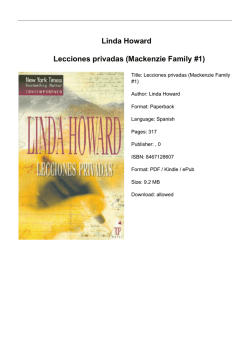

© Copyright 2026